
What role might the Church play in reshaping societal systems?
The current situation in our world does not change the nature or character of God.
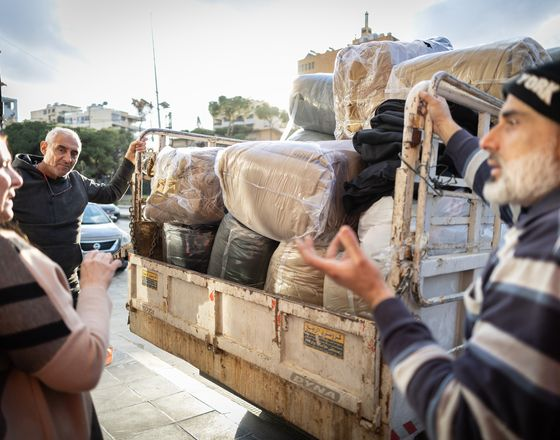
Tearfund Ireland is not a political organisation, so we do not often speak about political matters, but sometimes it is essential to address current social or societal events. Much of our humanitarian work is a necessary response to geopolitical activities and conflict. There are so many crises and conflicts around the world that we cannot directly address each of them. But the events occurring in Lebanon and the Middle East are different. We have committed, long term relationships with our partners in Lebanon, and having worked closely with them for more than 13 years, we feel it would be remiss to not address what is taking place in Lebanon and across the Middle East. First, I am pleased that the high level talks between Israel and Lebanese officials took place in early April. And, we have been thankful for the ceasefire – no matter how fragile it has been. We pray this ceasefire will facilitate a substantive resolution to the armed conflict between Hezbollah and Israel within Lebanon. It must be stated that we do not support the Hezbollah organisation or its continued firing of rockets into northern Israel. We condemn any act that would perpetuate violence and/or cause injury or death to anyone. But what has been happening in Lebanon is wrong. Coercive, or forced, displacement is a term to describe the act of forcing civilians to vacate their homes against their will. As of this writing, more than 1.2 million people within Lebanon have been forced from their homes. That is more than 20% of the population. In southern Lebanon, more than 600,000 people received evacuation orders and were told their homes would be destroyed. The Israeli Defence Forces have followed through and, so far, more than 40,000 homes have been destroyed. Critical infrastructure, roads, and bridges have also been destroyed, which will prevent people from returning to their property. All of this has been widely reported by reputable news agencies. What has not been widely reported is the release of white phosphorous over the fields across southern Lebanon. When this material settles it causes severe long-term damage to the soil and with negative impacts on future crop growth. If the military objective is to root out Hezbollah combatants, why would this substance be used across civilian-owned farmlands of southern Lebanon? International humanitarian law requires a distinction between combatants and civilians during times of conflict. Which means precautions are required to protect civilians and civilian infrastructure. Proportionality of response is also a requirement of the law. From the evidence on the ground, it seems clear the principles of precaution and proportionality are not being followed on the civilian population of Lebanon. The Israeli Defence Minister is on record stating their forces would take control of the southern region of Lebanon up to the Litani river. He went on to state that all homes and villages “would be destroyed, according to the model of Rafah and Beit Hanoun in Gaza… to permanently remove threats near the border.” [i] Such a statement should cause outrage and a forceful response by the international community, but it was made on a day when the news headlines focused on other items. When the ceasefire was announced, many displaced families chose to return to their property in southern Lebanon. They simply wanted to regain some sense of normalcy, even in the knowledge that the ceasefire would be fragile and their trip south would be risky. Our partners have told us many of these families were devasted when they saw that their homes were no longer there. The houses had all been blown up. We have been informed that 78 villages in southern Lebanon have been completely taken over and the houses are being destroyed. In 2022 when Russia invaded the sovereign territory of Ukraine, the international community had a very different reaction than what we have observed in military incursions around the world since. Tearfund Ireland has consistently condemned the barbarous attack by Hamas on 7 th October 2023, and we condemn the ongoing attacks by Hezbollah on the people of Israel. We have also condemned the killing of innocents in the Democratic Republic of Congo, the senseless atrocities occurring in Sudan, and Yemen, as well as in Gaza and the West Bank. We now call for an end to the displacement of people, occupation of sovereign Lebanese territory, and airstrikes in civilian neighbourhoods within Lebanon. Our partners in Lebanon have told us that this crisis feels different. They said it “feels darker” than previous crises. I am a firm believer in God’s active presence in our lives. Therein lies the tension. I believe we can live with a ‘peace that passes understanding’, so I am holding on to hope. Yet, I too, sense a disturbing darkness about the current crisis. I am disturbed by how normalised all the militarised activity is becoming. I am not naïve. I understand that there has rarely been a period where combat is not taking place somewhere in the world. But the level of militarised activity has become so commonplace we seem to have lost our shock of its occurrence. Lord have mercy on us. I am disturbed by the amount of money spent on military campaigns. The money spent by the USA in its war on Iran is staggering. The Centre for Strategic and International Studies has estimated that by day 12, the costs were estimated to be $16.5 billion. [ii] And, while this is a researched, educated estimate, it only covers American expenditure. How many more billions have been spent? Whatever the amount may eventually become, what will be the consequential costs of this war? How many people in Iran will be killed? How many lives irreparably damaged? I can imagine many ways these funds could have been used to improve lives of people, rather than destroy them. I am most disturbed by how God and His Scriptures are being invoked to justify actions of war. I fully appreciate that we live in Ireland, but our societal landscape is informed by what happens in other countries, particularly the geopolitical decisions. When we see senior officials within the US administration speaking of God and using bible verses to justify or validate their war actions, it can raise questions for Christians around the world. Is the current US military action a righteous activity? Does the Word of God validate the war effort? The use of Scripture to justify war is not new. For centuries people have claimed biblical justification for killing ‘the other’, and Jesus warned about those who do so (see Jn 16:2-3). But the recent and very public prayers and use of the Psalms to justify the US war effort is disturbing. I am not a theologian, but in my biblical studies [iii] I learned the Old Testament contains different types of literature and each is to be understood, interpreted, and applied according to the type of literature it is; namely narrative, poetic, or wisdom literature. These writings are Scripture, but we understand them differently than if we are reading the words of Jesus in the New Testament. The Psalms are poetic writings. Some of the Psalms, those quoting vengeance and judgement, are called imprecatory Psalms. Orthodox Christianity has long held the view that these Psalms should be interpreted through the life of Jesus as part of God’s overall redemptive history. Augustine held this view, Calvin held this view, as do many others. [iv] Applying these Psalms as a literal prayer against those with whom we are in conflict goes against the story of redemptive history and against the teachings of Jesus (see Lk 23:34; Mt 5:39, 18:21-22). In Tearfund Ireland we are convinced that God desires that we learn to love our neighbour (Lk 10:27) and one another (Jn 13:34), as well as those who may despise or persecute us (Mt 5:44). I have found myself in agreement with the comments of Pope Leo, in which he recently stated he does not think the message of “Gospel should be abused as some are doing” . He said he will continue to “speak strongly against war, seeking to promote peace.” And went on to say, “Too many people are suffering today, too many innocent lives have been lost, and I believe someone must stand up and say there is a better way.“ [v] I am disturbed by what I see. Yet I am holding on to hope. Across the world I see the results of the work of the enemy who comes to steal, kill, and destroy. Yet, I pray that we will see examples of the abundant life about which Jesus spoke (Jn 10:10). I pray that all those who know and love God will have the compassion, courage, and confidence to speak of his goodness, mercy, and truth, while demonstrating his character and nature to others. I pray for peace across the world and, particularly, across the Middle East. Cover Photo: Preparation and distribution of blankets, mattresses, hygiene products and diapers to displaced families sheltering in a public school. Credit: Local Christian partner [i] Perry, Tom. ‘Israel to Destroy ‘All Houses’ Near Lebanon Border, Defence Minister Says. Reuters; https://www.reuters.com/world/middle-east/israel-destroy-all-houses-near-lebanon-border-defence-minister-says-2026-03-31/ Published 31 March 2026. (accessed 1 April 2026) [ii] Cancian, Mark F. and Park, Chris H. Iran War Cost Estimate Update: $11.3 Billion at Day 6, $16.5 Billion at Day 12. ( https://www.csis.org/analysis/iran-war-cost-estimate-update-113-billion-day-6-165-billion-day-12 ) Published 13 March 2026. (accessed 1 April 2026). [iii] For the curious, I graduated from Taylor University, Upland, Indiana, USA in 1991 with degree in Christian Education and minors (diplomas) in Biblical Languages and Philosophy. I then received a Masters of Religious Education from Trinity Evangelical Divinity School, Deerefield, Illinois, USA in 1993. [iv] A helpful perspective on this can be read at the following link: St. Augustine is key to the difference between Pete Hegseth and Pope Leo | National Catholic Reporter [v] Vatican News. Pope on Board Plane to Algeria: ‘I am not a politician, I speak of the Gospel’. https://www.vaticannews.va/en/pope/news/2026-04/pope-on-board-plane-to-algeria-i-am-not-a-politician.html ) Published 13 April 2026. (accessed 14 April 2026).
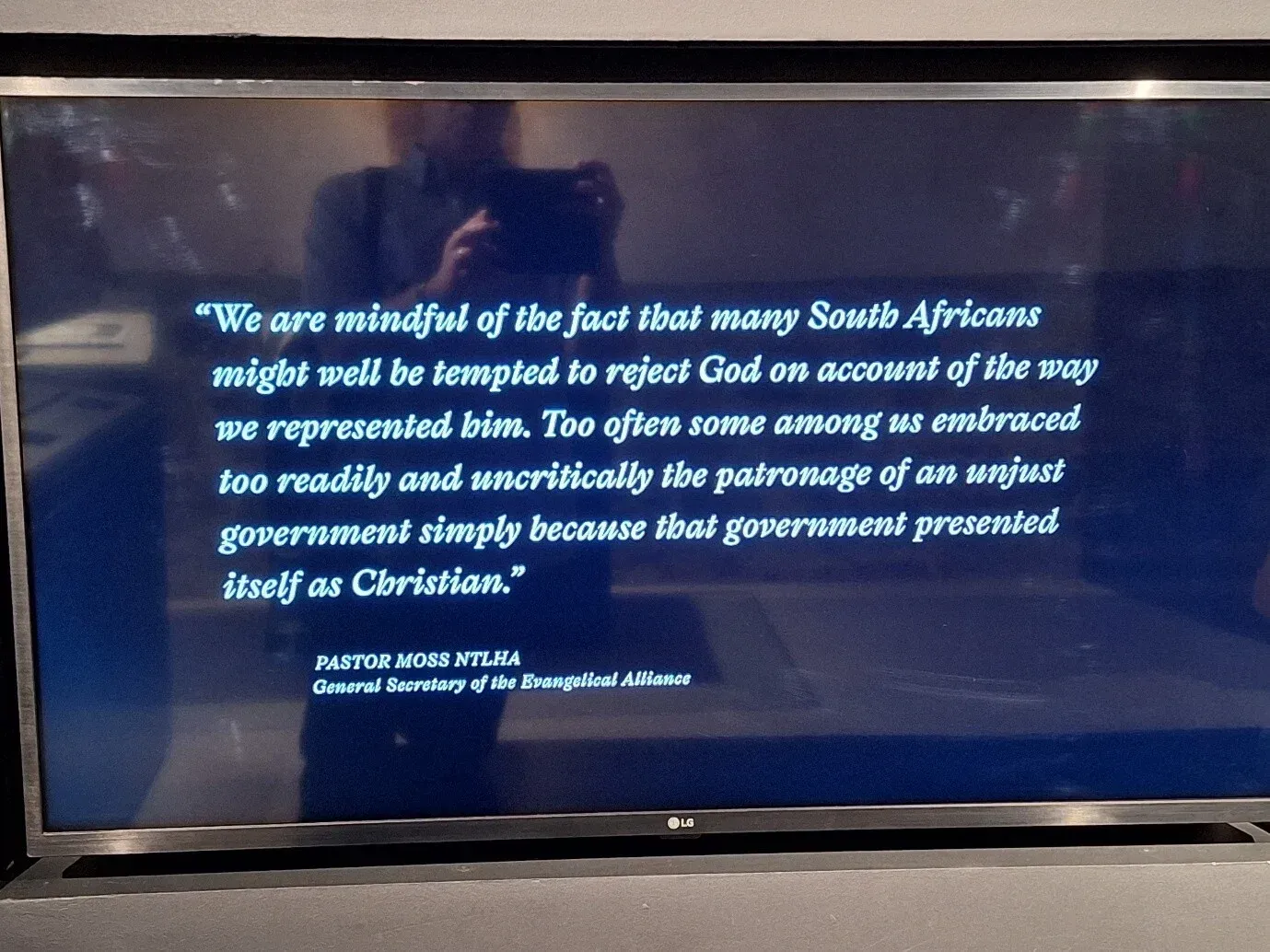
I don’t want to be among those asking forgiveness for not having spoken out. When I see an injustice, will I able to speak against it? If I am silent now, will I then regret my silence? I have stood at burial grounds and memorial sites to some of the world’s most tragic atrocities. Rwanda, Cambodia, Ireland’s famine graveyards, the Oklahoma Trail of Tears, and locations across the Middle East. Some of the events represented in these memorials were carried out with calculated intention. Some involved savage brutality. Some revealed the apathy and indifference to those who suffered. All are unique but they have one thing in common; each memorial reminds us of the evil that humans are capable of inflicting on another. There are common questions asked by most who visit or learn about events remembered by memorials such as these. How could people do such things to other people? How could others across the world let these things happen? And, commonly, the curators of the memorials have intentionally arranged the content so people who visit will go away with an intention to never forget what they have seen - with the purpose of preventing similar future atrocities. Recently I visited the Desmond Tutu Museum in Cape Town, South Africa. The museum gives insight into the injustices of the apartheid system and the efforts Desmond Tutu, and others, took to oppose and overturn apartheid. The museum was challenging and yet inspirational. The many stories of Archbishop Tutu’s courage were inspiring. And I was fascinated to learn more of his ability to empathise with the afflicted yet, with his words and character, diffuse their anger and redirect them toward constructive action. But one part of the exhibition deeply moved me. In an area revealing details about the work of the Truth and Reconciliation Commission (TRC) there was a section dedicated to the participation of the Faith Communities. On the wall was a digital presentation displaying statements from leaders of various religious groups who attended the TRC. The prayers from these leaders included confession for their silent complicity or asking forgiveness for their active promotion of the apartheid systems. We confess that on many occasions we failed to live up to the mission of our Lord, to preach the good news to the poor and proclaim freedom for the prisoners. We allowed our skewed society values to dictate our actions. Bishop Mvume Bandala; Methodist Church of South Africa We ask for forgiveness for not having fought in the struggle…We should have stood up for our people. Archbishop T W Ntongana; Council of African Instituted Churches We are mindful of the fact that many South Africans might well be tempted to reject God on account of the way we represented him. Too often some among embraced too readily and uncritically the patronage of an unjust government simply because that government presented itself as Christian. Pastor Moss Ntlha; General Secretary of the Evangelical Alliance The Catholic Church failed to live up to the principles of its gospel faith… by proving inadequate in communicating them successfully to its church community and to encourage them to live by these gospel values, particularly the white community. Bishop Kevin Dowling, Catholic Bishops’ Conference These photos are another reminder to me of the importance to not forget what I’ve learned and to speak out when injustices occur. As I read the prayers, I asked the Lord to continue working in me so, when I see injustice occurring, I will be willing to speak and act from his compassion, wisdom, grace, and truth. What are we going to do to carry out the ministry of reconciliation that has been entrusted to us? Archbishop Desmund Tutu; TRC, Faith Community Hearings, Day 1
What role might the Church play in reshaping societal systems?
The current situation in our world does not change the nature or character of God.
Tearfund Ireland is not a political organisation, so we do not often speak about political matters, but sometimes it is essential to address current social or societal events. Much of our humanitarian work is a necessary response to geopolitical activities and conflict. There are so many crises and conflicts around the world that we cannot directly address each of them. But the events occurring in Lebanon and the Middle East are different. We have committed, long term relationships with our partners in Lebanon, and having worked closely with them for more than 13 years, we feel it would be remiss to not address what is taking place in Lebanon and across the Middle East. First, I am pleased that the high level talks between Israel and Lebanese officials took place in early April. And, we have been thankful for the ceasefire – no matter how fragile it has been. We pray this ceasefire will facilitate a substantive resolution to the armed conflict between Hezbollah and Israel within Lebanon. It must be stated that we do not support the Hezbollah organisation or its continued firing of rockets into northern Israel. We condemn any act that would perpetuate violence and/or cause injury or death to anyone. But what has been happening in Lebanon is wrong. Coercive, or forced, displacement is a term to describe the act of forcing civilians to vacate their homes against their will. As of this writing, more than 1.2 million people within Lebanon have been forced from their homes. That is more than 20% of the population. In southern Lebanon, more than 600,000 people received evacuation orders and were told their homes would be destroyed. The Israeli Defence Forces have followed through and, so far, more than 40,000 homes have been destroyed. Critical infrastructure, roads, and bridges have also been destroyed, which will prevent people from returning to their property. All of this has been widely reported by reputable news agencies. What has not been widely reported is the release of white phosphorous over the fields across southern Lebanon. When this material settles it causes severe long-term damage to the soil and with negative impacts on future crop growth. If the military objective is to root out Hezbollah combatants, why would this substance be used across civilian-owned farmlands of southern Lebanon? International humanitarian law requires a distinction between combatants and civilians during times of conflict. Which means precautions are required to protect civilians and civilian infrastructure. Proportionality of response is also a requirement of the law. From the evidence on the ground, it seems clear the principles of precaution and proportionality are not being followed on the civilian population of Lebanon. The Israeli Defence Minister is on record stating their forces would take control of the southern region of Lebanon up to the Litani river. He went on to state that all homes and villages “would be destroyed, according to the model of Rafah and Beit Hanoun in Gaza… to permanently remove threats near the border.” [i] Such a statement should cause outrage and a forceful response by the international community, but it was made on a day when the news headlines focused on other items. When the ceasefire was announced, many displaced families chose to return to their property in southern Lebanon. They simply wanted to regain some sense of normalcy, even in the knowledge that the ceasefire would be fragile and their trip south would be risky. Our partners have told us many of these families were devasted when they saw that their homes were no longer there. The houses had all been blown up. We have been informed that 78 villages in southern Lebanon have been completely taken over and the houses are being destroyed. In 2022 when Russia invaded the sovereign territory of Ukraine, the international community had a very different reaction than what we have observed in military incursions around the world since. Tearfund Ireland has consistently condemned the barbarous attack by Hamas on 7 th October 2023, and we condemn the ongoing attacks by Hezbollah on the people of Israel. We have also condemned the killing of innocents in the Democratic Republic of Congo, the senseless atrocities occurring in Sudan, and Yemen, as well as in Gaza and the West Bank. We now call for an end to the displacement of people, occupation of sovereign Lebanese territory, and airstrikes in civilian neighbourhoods within Lebanon. Our partners in Lebanon have told us that this crisis feels different. They said it “feels darker” than previous crises. I am a firm believer in God’s active presence in our lives. Therein lies the tension. I believe we can live with a ‘peace that passes understanding’, so I am holding on to hope. Yet, I too, sense a disturbing darkness about the current crisis. I am disturbed by how normalised all the militarised activity is becoming. I am not naïve. I understand that there has rarely been a period where combat is not taking place somewhere in the world. But the level of militarised activity has become so commonplace we seem to have lost our shock of its occurrence. Lord have mercy on us. I am disturbed by the amount of money spent on military campaigns. The money spent by the USA in its war on Iran is staggering. The Centre for Strategic and International Studies has estimated that by day 12, the costs were estimated to be $16.5 billion. [ii] And, while this is a researched, educated estimate, it only covers American expenditure. How many more billions have been spent? Whatever the amount may eventually become, what will be the consequential costs of this war? How many people in Iran will be killed? How many lives irreparably damaged? I can imagine many ways these funds could have been used to improve lives of people, rather than destroy them. I am most disturbed by how God and His Scriptures are being invoked to justify actions of war. I fully appreciate that we live in Ireland, but our societal landscape is informed by what happens in other countries, particularly the geopolitical decisions. When we see senior officials within the US administration speaking of God and using bible verses to justify or validate their war actions, it can raise questions for Christians around the world. Is the current US military action a righteous activity? Does the Word of God validate the war effort? The use of Scripture to justify war is not new. For centuries people have claimed biblical justification for killing ‘the other’, and Jesus warned about those who do so (see Jn 16:2-3). But the recent and very public prayers and use of the Psalms to justify the US war effort is disturbing. I am not a theologian, but in my biblical studies [iii] I learned the Old Testament contains different types of literature and each is to be understood, interpreted, and applied according to the type of literature it is; namely narrative, poetic, or wisdom literature. These writings are Scripture, but we understand them differently than if we are reading the words of Jesus in the New Testament. The Psalms are poetic writings. Some of the Psalms, those quoting vengeance and judgement, are called imprecatory Psalms. Orthodox Christianity has long held the view that these Psalms should be interpreted through the life of Jesus as part of God’s overall redemptive history. Augustine held this view, Calvin held this view, as do many others. [iv] Applying these Psalms as a literal prayer against those with whom we are in conflict goes against the story of redemptive history and against the teachings of Jesus (see Lk 23:34; Mt 5:39, 18:21-22). In Tearfund Ireland we are convinced that God desires that we learn to love our neighbour (Lk 10:27) and one another (Jn 13:34), as well as those who may despise or persecute us (Mt 5:44). I have found myself in agreement with the comments of Pope Leo, in which he recently stated he does not think the message of “Gospel should be abused as some are doing” . He said he will continue to “speak strongly against war, seeking to promote peace.” And went on to say, “Too many people are suffering today, too many innocent lives have been lost, and I believe someone must stand up and say there is a better way.“ [v] I am disturbed by what I see. Yet I am holding on to hope. Across the world I see the results of the work of the enemy who comes to steal, kill, and destroy. Yet, I pray that we will see examples of the abundant life about which Jesus spoke (Jn 10:10). I pray that all those who know and love God will have the compassion, courage, and confidence to speak of his goodness, mercy, and truth, while demonstrating his character and nature to others. I pray for peace across the world and, particularly, across the Middle East. Cover Photo: Preparation and distribution of blankets, mattresses, hygiene products and diapers to displaced families sheltering in a public school. Credit: Local Christian partner [i] Perry, Tom. ‘Israel to Destroy ‘All Houses’ Near Lebanon Border, Defence Minister Says. Reuters; https://www.reuters.com/world/middle-east/israel-destroy-all-houses-near-lebanon-border-defence-minister-says-2026-03-31/ Published 31 March 2026. (accessed 1 April 2026) [ii] Cancian, Mark F. and Park, Chris H. Iran War Cost Estimate Update: $11.3 Billion at Day 6, $16.5 Billion at Day 12. ( https://www.csis.org/analysis/iran-war-cost-estimate-update-113-billion-day-6-165-billion-day-12 ) Published 13 March 2026. (accessed 1 April 2026). [iii] For the curious, I graduated from Taylor University, Upland, Indiana, USA in 1991 with degree in Christian Education and minors (diplomas) in Biblical Languages and Philosophy. I then received a Masters of Religious Education from Trinity Evangelical Divinity School, Deerefield, Illinois, USA in 1993. [iv] A helpful perspective on this can be read at the following link: St. Augustine is key to the difference between Pete Hegseth and Pope Leo | National Catholic Reporter [v] Vatican News. Pope on Board Plane to Algeria: ‘I am not a politician, I speak of the Gospel’. https://www.vaticannews.va/en/pope/news/2026-04/pope-on-board-plane-to-algeria-i-am-not-a-politician.html ) Published 13 April 2026. (accessed 14 April 2026).
I don’t want to be among those asking forgiveness for not having spoken out. When I see an injustice, will I able to speak against it? If I am silent now, will I then regret my silence? I have stood at burial grounds and memorial sites to some of the world’s most tragic atrocities. Rwanda, Cambodia, Ireland’s famine graveyards, the Oklahoma Trail of Tears, and locations across the Middle East. Some of the events represented in these memorials were carried out with calculated intention. Some involved savage brutality. Some revealed the apathy and indifference to those who suffered. All are unique but they have one thing in common; each memorial reminds us of the evil that humans are capable of inflicting on another. There are common questions asked by most who visit or learn about events remembered by memorials such as these. How could people do such things to other people? How could others across the world let these things happen? And, commonly, the curators of the memorials have intentionally arranged the content so people who visit will go away with an intention to never forget what they have seen - with the purpose of preventing similar future atrocities. Recently I visited the Desmond Tutu Museum in Cape Town, South Africa. The museum gives insight into the injustices of the apartheid system and the efforts Desmond Tutu, and others, took to oppose and overturn apartheid. The museum was challenging and yet inspirational. The many stories of Archbishop Tutu’s courage were inspiring. And I was fascinated to learn more of his ability to empathise with the afflicted yet, with his words and character, diffuse their anger and redirect them toward constructive action. But one part of the exhibition deeply moved me. In an area revealing details about the work of the Truth and Reconciliation Commission (TRC) there was a section dedicated to the participation of the Faith Communities. On the wall was a digital presentation displaying statements from leaders of various religious groups who attended the TRC. The prayers from these leaders included confession for their silent complicity or asking forgiveness for their active promotion of the apartheid systems. We confess that on many occasions we failed to live up to the mission of our Lord, to preach the good news to the poor and proclaim freedom for the prisoners. We allowed our skewed society values to dictate our actions. Bishop Mvume Bandala; Methodist Church of South Africa We ask for forgiveness for not having fought in the struggle…We should have stood up for our people. Archbishop T W Ntongana; Council of African Instituted Churches We are mindful of the fact that many South Africans might well be tempted to reject God on account of the way we represented him. Too often some among embraced too readily and uncritically the patronage of an unjust government simply because that government presented itself as Christian. Pastor Moss Ntlha; General Secretary of the Evangelical Alliance The Catholic Church failed to live up to the principles of its gospel faith… by proving inadequate in communicating them successfully to its church community and to encourage them to live by these gospel values, particularly the white community. Bishop Kevin Dowling, Catholic Bishops’ Conference These photos are another reminder to me of the importance to not forget what I’ve learned and to speak out when injustices occur. As I read the prayers, I asked the Lord to continue working in me so, when I see injustice occurring, I will be willing to speak and act from his compassion, wisdom, grace, and truth. What are we going to do to carry out the ministry of reconciliation that has been entrusted to us? Archbishop Desmund Tutu; TRC, Faith Community Hearings, Day 1