What role might the Church play in reshaping societal systems?
The current situation in our world does not change the nature or character of God.

Polycrises. This is a term used by the international development sector to describe the multiple crises facing our world. It’s an appropriate term that needs very little explaining or unpacking. It is, essentially, what it looks like: a word made up by combining two words. 'Poly' means 'many' or 'multiple', and 'crises' is the plural of 'crisis'. One does not need to look too far or too deep into the headlines or too far across the globe to appreciate the relevance of this term. We are experiencing polycrises. Frequently, these crises are summarised by Conflict, Climate, and Contagion. There are militarised conflicts happening around the world – some are in our headlines, most are not. These conflicts have a direct impact on thousands, if not millions, of people. There are the direct results of death, injury, damage to infrastructure, loss of homes, mass displacement, etc. But this is only the beginning. There are long-term impacts on a nation’s healthcare, education systems, reduction in local economies, immigration, and the list goes on. But the multiple conflicts around the world are only part of the polycrisis. Immigration of refugees and displaced people and various attempts to address this challenge are another form of crisis. The earth’s changing weather patterns are causing acute, catastrophic weather events which form another crisis. The contagion referred to can not only include the risk of a global public health crisis but can also be the sociological dysfunctions that seem to be forcing us all to extreme polarisation and isolationism. These are seismic challenges facing our world – most of which our children and grandchildren will be forced to grapple with. I frequently ask the Lord about these crises. What would he have us do? The Church is often at the forefront of a response to a crisis, demonstrating compassion, helping with healing and humanitarian aid. But is there something we can do to help prevent the crises from happening in the first place? How can we, His Church, speak into these crises? One lesson I’ve been reflecting on is the familiar story of when Jesus calmed the storm. The story is told in three of the New Testament books: Matthew 8:23, Mark 4:35, and Luke 8:22. You’re probably familiar with it, but there are a couple of details that I find fascinating. Jesus and his disciples were in a boat going across a body of water (some call it a sea, some call it a lake) that was known for being susceptible to quickly forming storms caused by high winds. The authors tell us that such a storm quickly arose, and the disciples were so afraid they thought they were going to be overcome by the storm and die at sea. Keep in mind that at least three of these men grew up working on this lake as professional fishermen. At the height of their fear, Jesus is woken from his sleep and observes the problem. The sea is so choppy and the waves are so strong that the boat is on the verge of being overturned and the men are at risk of being thrown overboard. In response, Jesus does something unexpected. He rebukes the wind and speaks peace to the waves (Mk 4:39). In the chaos of the turbulence, Jesus cut through the fear, the reactivity, and the panic with a clear identification of the source of the problem. The waves were not the problem. The wind was the problem. The waves were a symptom of the problem. The disciples likely felt they were in a polycrisis. The storm was raging, and in the darkness of night it was hard to see how to navigate the boat. The winds were so strong it was difficult to control the sail and the rudder. The waves were so strong some may have lost their hold and risked going over the side. And, given the size of the waves, the boat was likely filling with water. For the disciples who were not experienced fishermen, this moment of polycrisis could likely have been a defining moment of outright terror. It would be easy to understand why they may have put all their focus on trying to address the problems caused by the waves. That is natural. That is what was seemingly in their realm of control. This is, after all, how we so often deal with crises. Respond to the symptoms. Address what we can. Focus our efforts on the things we can impact. But Jesus demonstrated an approach that I am eager to learn more about. He elevated his observation to see beyond the natural. He had the clarity to recognise that the waves were a symptom of another problem that he needed to address. And, with supernatural wisdom and confidence in his identity, he rebuked the wind. In the polycrises facing our current contexts, could there be ‘winds’ blowing which are creating havoc, fear, and panic? I have been increasingly asking the Lord to identify these and show me how to address them. How often do I pray for help, for rescue, for a calming of the storm that I am in? Is it possible that the answer to my prayers for rescue lies in my ability to discern where I need to declare a rebuke and where I need to speak peace?
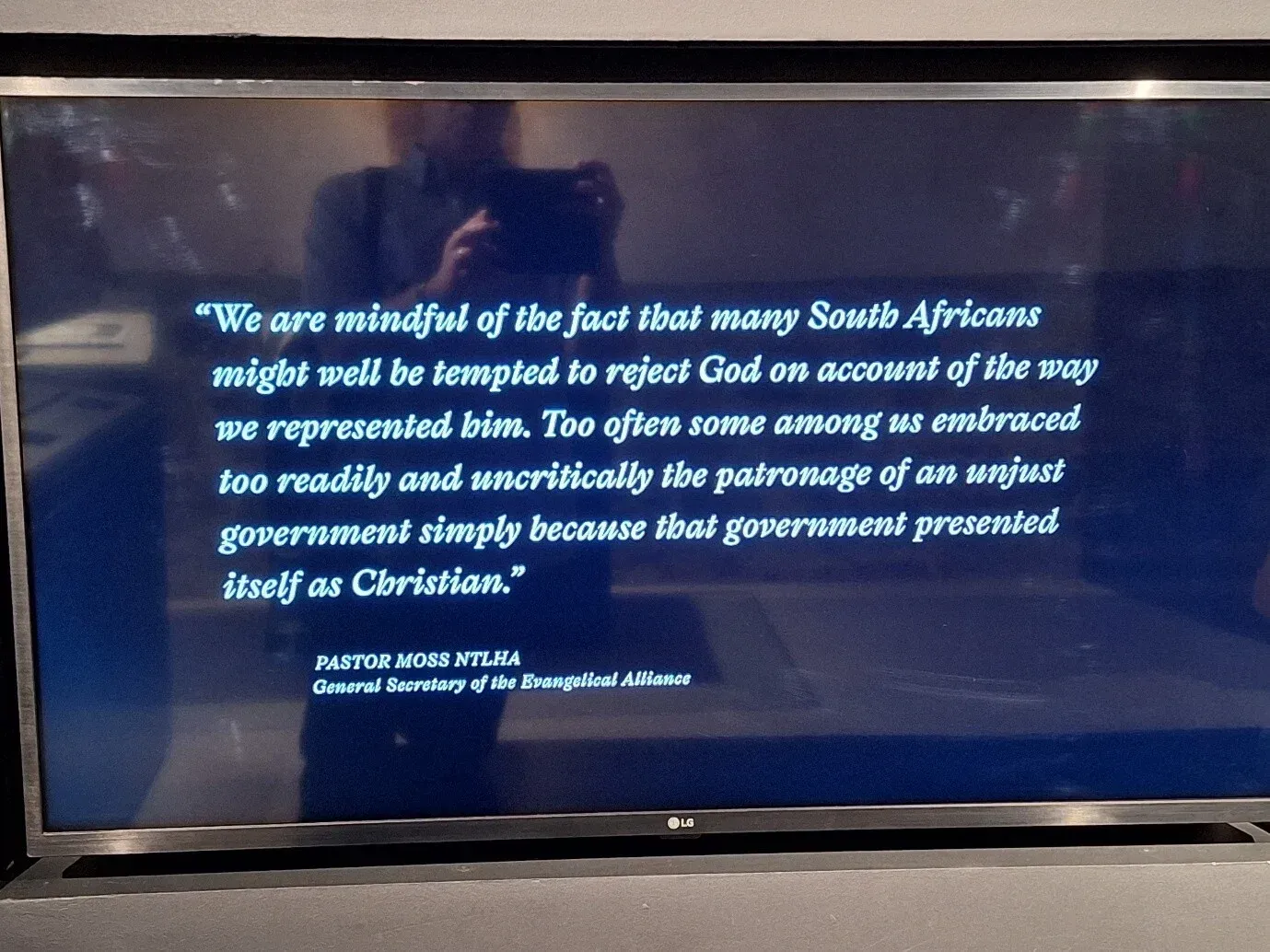
I don’t want to be among those asking forgiveness for not having spoken out. When I see an injustice, will I able to speak against it? If I am silent now, will I then regret my silence? I have stood at burial grounds and memorial sites to some of the world’s most tragic atrocities. Rwanda, Cambodia, Ireland’s famine graveyards, the Oklahoma Trail of Tears, and locations across the Middle East. Some of the events represented in these memorials were carried out with calculated intention. Some involved savage brutality. Some revealed the apathy and indifference to those who suffered. All are unique but they have one thing in common; each memorial reminds us of the evil that humans are capable of inflicting on another. There are common questions asked by most who visit or learn about events remembered by memorials such as these. How could people do such things to other people? How could others across the world let these things happen? And, commonly, the curators of the memorials have intentionally arranged the content so people who visit will go away with an intention to never forget what they have seen - with the purpose of preventing similar future atrocities. Recently I visited the Desmond Tutu Museum in Cape Town, South Africa. The museum gives insight into the injustices of the apartheid system and the efforts Desmond Tutu, and others, took to oppose and overturn apartheid. The museum was challenging and yet inspirational. The many stories of Archbishop Tutu’s courage were inspiring. And I was fascinated to learn more of his ability to empathise with the afflicted yet, with his words and character, diffuse their anger and redirect them toward constructive action. But one part of the exhibition deeply moved me. In an area revealing details about the work of the Truth and Reconciliation Commission (TRC) there was a section dedicated to the participation of the Faith Communities. On the wall was a digital presentation displaying statements from leaders of various religious groups who attended the TRC. The prayers from these leaders included confession for their silent complicity or asking forgiveness for their active promotion of the apartheid systems. We confess that on many occasions we failed to live up to the mission of our Lord, to preach the good news to the poor and proclaim freedom for the prisoners. We allowed our skewed society values to dictate our actions. Bishop Mvume Bandala; Methodist Church of South Africa We ask for forgiveness for not having fought in the struggle…We should have stood up for our people. Archbishop T W Ntongana; Council of African Instituted Churches We are mindful of the fact that many South Africans might well be tempted to reject God on account of the way we represented him. Too often some among embraced too readily and uncritically the patronage of an unjust government simply because that government presented itself as Christian. Pastor Moss Ntlha; General Secretary of the Evangelical Alliance The Catholic Church failed to live up to the principles of its gospel faith… by proving inadequate in communicating them successfully to its church community and to encourage them to live by these gospel values, particularly the white community. Bishop Kevin Dowling, Catholic Bishops’ Conference These photos are another reminder to me of the importance to not forget what I’ve learned and to speak out when injustices occur. As I read the prayers, I asked the Lord to continue working in me so, when I see injustice occurring, I will be willing to speak and act from his compassion, wisdom, grace, and truth. What are we going to do to carry out the ministry of reconciliation that has been entrusted to us? Archbishop Desmund Tutu; TRC, Faith Community Hearings, Day 1
What role might the Church play in reshaping societal systems?
The current situation in our world does not change the nature or character of God.
Polycrises. This is a term used by the international development sector to describe the multiple crises facing our world. It’s an appropriate term that needs very little explaining or unpacking. It is, essentially, what it looks like: a word made up by combining two words. 'Poly' means 'many' or 'multiple', and 'crises' is the plural of 'crisis'. One does not need to look too far or too deep into the headlines or too far across the globe to appreciate the relevance of this term. We are experiencing polycrises. Frequently, these crises are summarised by Conflict, Climate, and Contagion. There are militarised conflicts happening around the world – some are in our headlines, most are not. These conflicts have a direct impact on thousands, if not millions, of people. There are the direct results of death, injury, damage to infrastructure, loss of homes, mass displacement, etc. But this is only the beginning. There are long-term impacts on a nation’s healthcare, education systems, reduction in local economies, immigration, and the list goes on. But the multiple conflicts around the world are only part of the polycrisis. Immigration of refugees and displaced people and various attempts to address this challenge are another form of crisis. The earth’s changing weather patterns are causing acute, catastrophic weather events which form another crisis. The contagion referred to can not only include the risk of a global public health crisis but can also be the sociological dysfunctions that seem to be forcing us all to extreme polarisation and isolationism. These are seismic challenges facing our world – most of which our children and grandchildren will be forced to grapple with. I frequently ask the Lord about these crises. What would he have us do? The Church is often at the forefront of a response to a crisis, demonstrating compassion, helping with healing and humanitarian aid. But is there something we can do to help prevent the crises from happening in the first place? How can we, His Church, speak into these crises? One lesson I’ve been reflecting on is the familiar story of when Jesus calmed the storm. The story is told in three of the New Testament books: Matthew 8:23, Mark 4:35, and Luke 8:22. You’re probably familiar with it, but there are a couple of details that I find fascinating. Jesus and his disciples were in a boat going across a body of water (some call it a sea, some call it a lake) that was known for being susceptible to quickly forming storms caused by high winds. The authors tell us that such a storm quickly arose, and the disciples were so afraid they thought they were going to be overcome by the storm and die at sea. Keep in mind that at least three of these men grew up working on this lake as professional fishermen. At the height of their fear, Jesus is woken from his sleep and observes the problem. The sea is so choppy and the waves are so strong that the boat is on the verge of being overturned and the men are at risk of being thrown overboard. In response, Jesus does something unexpected. He rebukes the wind and speaks peace to the waves (Mk 4:39). In the chaos of the turbulence, Jesus cut through the fear, the reactivity, and the panic with a clear identification of the source of the problem. The waves were not the problem. The wind was the problem. The waves were a symptom of the problem. The disciples likely felt they were in a polycrisis. The storm was raging, and in the darkness of night it was hard to see how to navigate the boat. The winds were so strong it was difficult to control the sail and the rudder. The waves were so strong some may have lost their hold and risked going over the side. And, given the size of the waves, the boat was likely filling with water. For the disciples who were not experienced fishermen, this moment of polycrisis could likely have been a defining moment of outright terror. It would be easy to understand why they may have put all their focus on trying to address the problems caused by the waves. That is natural. That is what was seemingly in their realm of control. This is, after all, how we so often deal with crises. Respond to the symptoms. Address what we can. Focus our efforts on the things we can impact. But Jesus demonstrated an approach that I am eager to learn more about. He elevated his observation to see beyond the natural. He had the clarity to recognise that the waves were a symptom of another problem that he needed to address. And, with supernatural wisdom and confidence in his identity, he rebuked the wind. In the polycrises facing our current contexts, could there be ‘winds’ blowing which are creating havoc, fear, and panic? I have been increasingly asking the Lord to identify these and show me how to address them. How often do I pray for help, for rescue, for a calming of the storm that I am in? Is it possible that the answer to my prayers for rescue lies in my ability to discern where I need to declare a rebuke and where I need to speak peace?
I don’t want to be among those asking forgiveness for not having spoken out. When I see an injustice, will I able to speak against it? If I am silent now, will I then regret my silence? I have stood at burial grounds and memorial sites to some of the world’s most tragic atrocities. Rwanda, Cambodia, Ireland’s famine graveyards, the Oklahoma Trail of Tears, and locations across the Middle East. Some of the events represented in these memorials were carried out with calculated intention. Some involved savage brutality. Some revealed the apathy and indifference to those who suffered. All are unique but they have one thing in common; each memorial reminds us of the evil that humans are capable of inflicting on another. There are common questions asked by most who visit or learn about events remembered by memorials such as these. How could people do such things to other people? How could others across the world let these things happen? And, commonly, the curators of the memorials have intentionally arranged the content so people who visit will go away with an intention to never forget what they have seen - with the purpose of preventing similar future atrocities. Recently I visited the Desmond Tutu Museum in Cape Town, South Africa. The museum gives insight into the injustices of the apartheid system and the efforts Desmond Tutu, and others, took to oppose and overturn apartheid. The museum was challenging and yet inspirational. The many stories of Archbishop Tutu’s courage were inspiring. And I was fascinated to learn more of his ability to empathise with the afflicted yet, with his words and character, diffuse their anger and redirect them toward constructive action. But one part of the exhibition deeply moved me. In an area revealing details about the work of the Truth and Reconciliation Commission (TRC) there was a section dedicated to the participation of the Faith Communities. On the wall was a digital presentation displaying statements from leaders of various religious groups who attended the TRC. The prayers from these leaders included confession for their silent complicity or asking forgiveness for their active promotion of the apartheid systems. We confess that on many occasions we failed to live up to the mission of our Lord, to preach the good news to the poor and proclaim freedom for the prisoners. We allowed our skewed society values to dictate our actions. Bishop Mvume Bandala; Methodist Church of South Africa We ask for forgiveness for not having fought in the struggle…We should have stood up for our people. Archbishop T W Ntongana; Council of African Instituted Churches We are mindful of the fact that many South Africans might well be tempted to reject God on account of the way we represented him. Too often some among embraced too readily and uncritically the patronage of an unjust government simply because that government presented itself as Christian. Pastor Moss Ntlha; General Secretary of the Evangelical Alliance The Catholic Church failed to live up to the principles of its gospel faith… by proving inadequate in communicating them successfully to its church community and to encourage them to live by these gospel values, particularly the white community. Bishop Kevin Dowling, Catholic Bishops’ Conference These photos are another reminder to me of the importance to not forget what I’ve learned and to speak out when injustices occur. As I read the prayers, I asked the Lord to continue working in me so, when I see injustice occurring, I will be willing to speak and act from his compassion, wisdom, grace, and truth. What are we going to do to carry out the ministry of reconciliation that has been entrusted to us? Archbishop Desmund Tutu; TRC, Faith Community Hearings, Day 1