News : News Article

Cash for work: kick starting Haiti’s economy

Cash for work: kick starting Haiti’s economy – 8 Apr 2010

Extract from Tearfund aid workers blog:

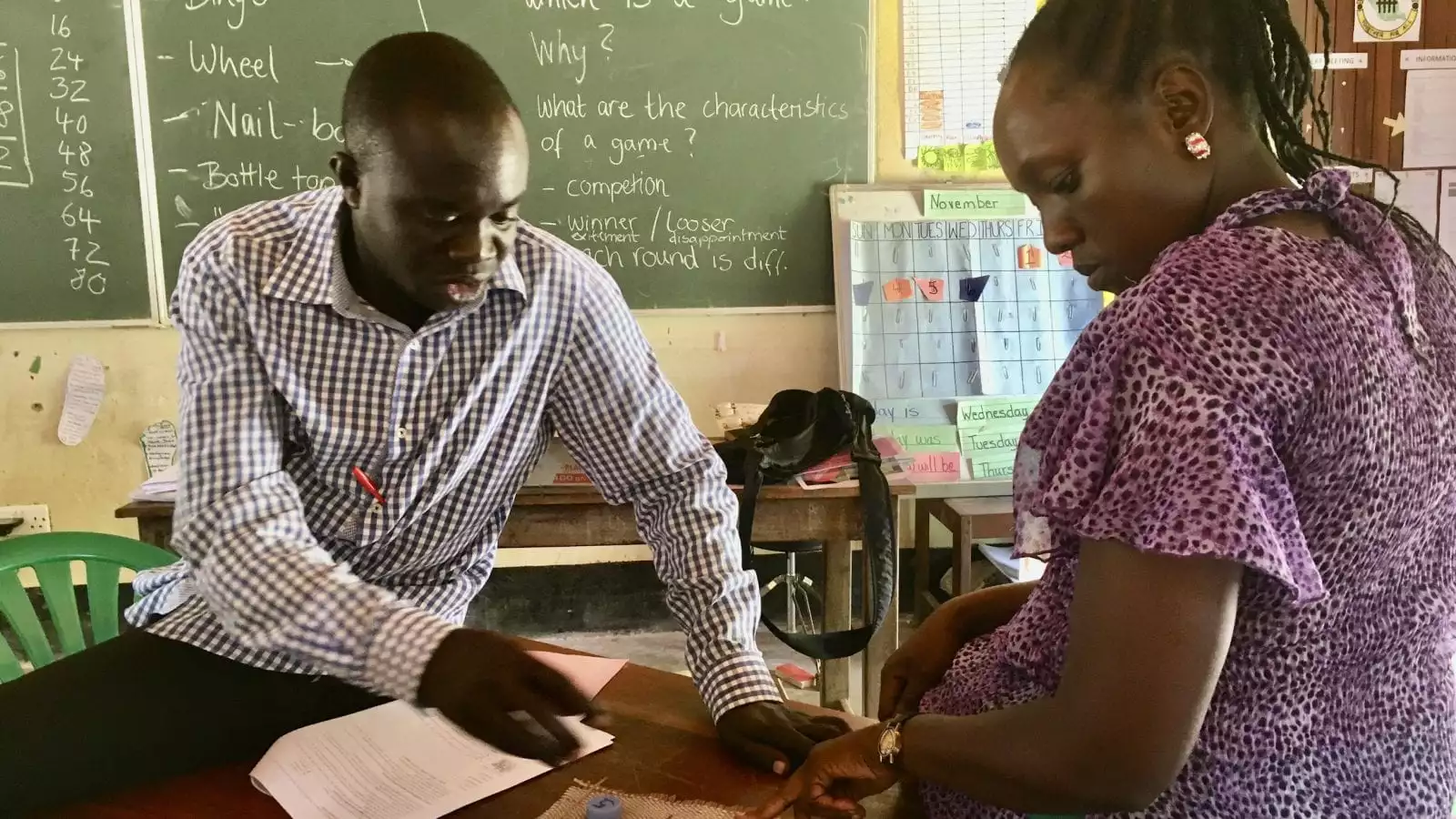
I moved quickly out of the way as the young man swung a wheelbarrow of rocks around me, making his way from a pile of rubble to the workmen behind me.

Tearfund is paying for a road to be constructed, linking two remote villages in the hills behind Leogane, west of Port-au-Prince. The rocks pack down on top of a clay road, making it considerably more durable during the wet season ahead. Donkeys walk along the road, carrying local produce in one direction to the rural market, and consumer goods in the other back to a remote village.

image

To be precise, Tearfund is not so much paying for a road as injecting cash into a starved local economy where markets fractured and collapsed along with people’s houses and assets after the earthquake. Each adult worker receives a wage in exchange for a week’s work; the fact that a road is built means everyone benefits. Another benefit is that creating roads from rubble is a great way to clear rubble from sites where new buildings need to go up, not to mention the benefits of bringing people together on a constructive project after such a tragedy.

People who have experienced injuries and are physically unable to work have a wage set aside for them so they are not excluded.

These highland communities were poor before the earthquake. Now, their houses, schools and churches lie in ruins and they are paying more for their basic goods after prices shot up on January 12th – the day of the earthquake.

Many agencies use ‘cash for work’ schemes, like Tearfund’s road building project, to kick-start the economy and create jobs where employment has collapsed.
Rather than make assumptions about what people need, this type of project enables families to make their own choices about how aid money is spent. Studies show that people typically spend the money wisely, for example on housing repairs, education fees or replacing household equipment and essential farm tools. There’s no way that Tearfund could have known the individual needs of each family, or provided for them in the short time since the earthquake, so working like this means each family can make sure their urgent needs are met.

It helps people help themselves.

Haiti: More than €160,000 raised

Haiti: More than €160,000 raised – 31 Mar 2010

Generous Irish supporters have raised more than €160,000 for Haiti earthquake survivors. Some people have held fundraising concerts, others have gone on a sponsored fast and many people have helped raise awareness through their churches and schools. Because of this financial support thousands of families who had not received any aid in Haiti’s earthquake shattered capital are now receiving help from Tearfund staff and partners. More details of their work can be found here. Tearfund in the UK have raised more than €6 million which will address the immediate needs of the people and the longer term reconstruction.

image

Coping with loss

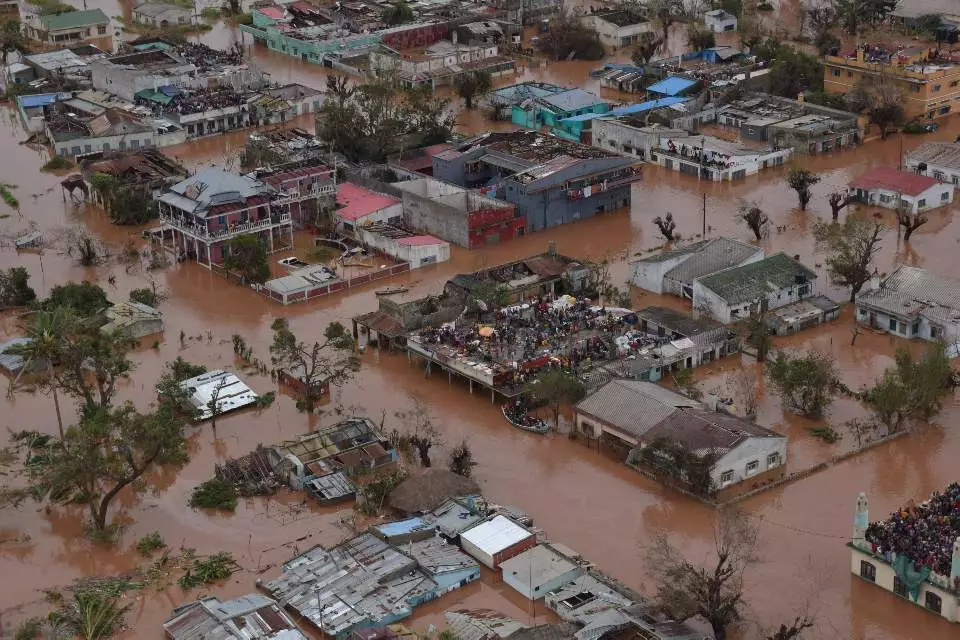
Getting a handle on the psychological pain caused by the disaster is not so easy but increasingly it is becoming evident. Virtually all survivors can testify to knowing a family member, friend or neighbour who died in the 12 January quake and are therefore carrying the pain of their loss. Add to that turbulent mix the awful hardship in the aftermath of the tremors – no food, water, shelter or medical help, plus lawlessness – and you have the conditions for lasting mental scarring.

A Haitian pastor’s story

One local pastor who has been in touch with Tearfund’s team responding in Haiti summed it up as follows:

‘I can tell you life is very difficult for us nowadays,’ he said. ‘It is really hard to talk and think about the night of 12 January, 2010. It was 4:50pm when this long night began with a strange phenomenon that no one understands.’ The pastor said, ‘Since 12 January, we sleep and live right in the street, without a tent. Right now, my wife and daughter have colds and my daughter has diarrhoea due to bad water. In spite of all, we can claim God is good all the time.’

Long term development

With more than €2 million raised by Tearfund supporters for Haiti, we’re currently responding to the immediate physical needs of thousands of Haitians. We’re also looking to the long term and are drawing up plans to rebuild lives, a process that will be measured in years rather than months. Standing alongside local churches, we’ll be there to help survivors come to terms with earthquake’s psychological, emotional and spiritual legacies.

‘We want to build back better‘ says Reuben Coulter, Chief Executive of Tearfund Ireland ‘There is a real danger if reconstruction is rushed that it will be done badly. If we plan well now and help support our Haitian partners to get back on their feet then we will see sustainable transformation.’

image

Most of the immediate needs have been met but there is still a need to finance the reconstruction. Donate now online here or by credit card by contacting Christine in our office – 01 878 3200 or enquiries@tearfund.ie or post a cheque to; Tearfund Ireland, 5-7 Upper O Connell Street, Dublin 1.

Slavery & St. Patrick

Slavery & St. Patrick – 16 Mar 2010

March 17th, St. Patrick’s Day is celebrated across the world. But few people remember how his life in Ireland began as a child slave.

When he was about 16 Patrick was captured from Britain by Irish raiders and taken as a slave to Ireland. He was forced to work looking after pigs for six years before escaping and returning to his family. Patrick later returned to Ireland as a missionary after a vision where he saw the Irish people calling out for him to come and share the good news of Christ. The history of Ireland was irrevocably changed because of one slave boy.

Modern-day Slavery

There are 27 million people in slavery today. This means that there are more people in slavery today than at any other time in human history. Slavery has existed for thousands of years, but changes in the world’s economy and societies over the past 50 years have enabled a resurgence of slavery.

One hundred and forty-three years after the 13th Amendment to the U.S. Constitution was passed in 1865 and 60 years after the U.N.‘s Universal Declaration of Human Rights banned the slave trade worldwide, slavery — or, as it is euphemistically called, human trafficking — is actually thriving. It is, as Hillary Clinton has said, “the dark underbelly of globalization.”

Slavery has many forms — debt bondage, forced domestic servitude and forced prostitution — still exists is, indeed, shocking, mostly because it is invisible to those of us who don’t know where to look for it.

This new slavery has two prime characteristics: slaves today are cheap and they are disposable.

Cheap, Disposable People

  • An average slave in the American South in 1850 cost the equivalent of $40,000 in today’s money; today a slave costs an average of $90.
  • In 1850 it was difficult to capture a slave and then transport them to the US. Today, millions of economically and socially vulnerable people around the world are potential slaves.

Slavery in Ireland today

Sadly it is also happening in Ireland today; people are being trafficked into our country to provide slave labour or forced into prostitution. Others are being trafficked through Ireland to other destinations.

The 2008 US State Dept “Trafficking in Persons Report” says “Ireland is a destination country for women, men, and children trafficked for the purposes of commercial sexual exploitation and forced labor… Women from Eastern Europe, Nigeria, other parts of Africa as well as smaller numbers from South America and Asia, have reportedly been trafficked to Ireland for forced prostitution. Labour trafficking victims reportedly consist of men and women from Bangladesh, Pakistan, Egypt, and the Philippines”. Find out more about trafficking in Ireland from Ruhama

Rescuing girls from slavery

When she was 13, Farheen was sold to a brothel owner in Mumbai for 5,000 rupees (€65). Her captivity lasted for years and years.

But, one day, outside the brothel, Farheen met staff at Tearfund’s partner Aruna. The Aruna team worked tirelessly for eight years to secure her freedom. Now, Farheen is a cleaner at the Aruna drop-in centre in the mornings and works as a counsellor for a government organisation in the afternoon, visiting girls who work as prostitutes.

Tearfund partners in India are successfully working together to end child slavery. They are raiding brothels to rescue girls, prosecuting brothels which are involved in trafficking and providing care and rehabilitation so that these girls can once again lead a live of freedom.

Churches feed the hungry in Haiti

Churches feed the hungry in Haiti – 21 Jan 2010

Hot meals comprising rice, beans and porridge are being served to 1,400 vulnerable people daily by World Relief (Tearfund partner) staff alongside volunteers from local congregations. World Relief, which has been working in the Caribbean country for 15 years, is using its close links with local congregations to mobilise manpower for the relief effort. They are planning to launch more feeding centres, including two in the badly affected areas of Leogan and Jacmel, which have received little emergency aid. World Relief staff are also working to boost desperately needed water supplies by drilling bore holes and installing water pumps.

Injured

Meanwhile World Relief medical staff continue to provide treatment to the injured at its 300-bed hospital in Port-au-Prince. It’s one of the few centres able to treat people and has three operating theatres working around the clock.

Medical needs

But it desperately needs more medicines such as antibiotics and painkillers, according to Dr Hubert Morquette, World Relief’s country director for Haiti, who has been treating people himself.

Please give to Tearfund’s emergency appeal.

Prayer is also needed. Dr Morquette said, ‘Please continue to keep us in your prayers as our patients experience both physical and psychological trauma.’ Those who’ve escaped injury are also in dire need of aid support. A Tearfund team of disaster response experts has visited a camp run by another Tearfund partner in the district of Delmas, in Port-au-Prince, which is looking after 2,000 people, while another camp had 10,000 residents.

image

Crying out

As rescue efforts to recover people trapped in toppled buildings continue, there are small signs of normal everyday life restarting in Port-au-Prince. Jean Claude Cerin, Tearfund’s Country Representative for Haiti, said, ‘Marketplaces are selling basic goods and merchants are back on the streets. ‘Banks are planning to start opening again sometime this week as soon as they can put together a security system to protect them. ‘A few gas stations are reopening and one can observe long lines of vehicles waiting to fill up.’ There are also signs that the Haitian government is attempting to play a bigger role in the earthquake response effort, currently being led by the UN and the US. ‘Haitians are crying for some leadership wherever it comes from,’ said Jean Claude.

Please give today

Only €31 can provide a tarpaulin for shelter for a family and €55 can provide a family of with emergency household items,water containers and blankets.

Prayer resources

Download a powerpoint presentation here

Please share this with your church this Sunday

Keep checking our website as we will have updated information and video before the end of the week.

Donate now online here or by credit card by contacting Christine in our office – 01 878 3200.

Medical relief in Haiti

Medical relief in Haiti – 18 Jan 2010

Medical staff with a Tearfund partner in Haiti are working around the clock treating hundreds of people with earthquake-related injuries.

The King’s Hospital, run by World Relief, is one of the few places offering treatment in the capital Port-au-Prince after escaping the tremors with just a few cracks to the walls.

It’s been operating since last Tuesday’s quake killed between 50,000 and 200,000 people. Tearfund emergency response teams have been responding to the disaster. An emergency appeal is underway to allow us to increase the scale of our response. To give, click here.

Broken bones from falling masonry are among the main injuries doctors and nurses are dealing with.

Suffering

Dr Hubert Morquette, World Relief’s country director for Haiti, said, ‘We’ve treated hundreds of injuries as well as countless open and closed fractures. We work all day and late into the night as patients continue to flock to our facility. There’s a lot of suffering and we go above and beyond trying to save lives but at times they still succumb to their injuries. We thank God for the medical supplies we’ve received over the last couple of months which have enabled us to provide care to our numerous patients.’

Total despair

More medical staff are needed, particularly surgeons, and there’s also a shortage of antibiotics and pain-killers. Dr Morquette added, ‘Port-au-Prince is in total despair. The major governmental institutions have crumbled. It is a major catastrophe.’

World Relief has been working in Haiti for 15 years, partnering with local churches on health projects and micro-enterprise schemes. Tearfund is responding to the earthquake through such local partners and has also sent a disaster response team to Haiti.

Please give today

Only €31 can provide a tarpaulin for shelter for a family and €55 can provide a family of with emergency household items,water containers and blankets.

Donate now online here or by credit card by contacting Christine in our office – 01 878 3200

Haiti Earthquake Update – 15 Jan 2010

This email has just come in from Tearfund Country Representative Jean Claude (15th Jan)

Dear friends and colleagues,

I appreciate very much your support and all the prayers that are going up for us in Haiti. The disaster is very big indeed. We are used to hurricanes, not to earthquakes. Our last major earthquake happened in the North of Haiti in 1847, almost 200 years ago. So people have no reflex for this and are not trained on the right preservation moves. In general, the disaster is terrible because there are many buildings that collapsed at a peak time —4:45 pm— including Schools, Universities, Government buildings, the UN headquarters, hotels, supermarkets, hospitals, etc. Several important people from Government, the church and the business communities also died and we cannot count the dead among the general population.

The current situation is very critical. There is no organized relief assistance from the Government who seems to be paralyzed. Even the UN forces are very slow to react as they have had a lot of losses among themselves, including the head of the UN in Haiti and his assistant. Movement is quite difficult because there is no fuel being sold, no city power, no internal communication. Hospitals that were not destroyed have closed their doors because they are overwhelmed and the wounded population is remaining without care. There is a general feeling of fear across the population as people are scared of a rebound. Also there are many damaged buildings that could collapse any time soon. The bodies of dead people are accumulating and people don’t know how to dispose of them. So they just throw them on the streets expecting the Government to get rid of them. But this is not happening quickly and this may create a catastrophic situation and health hazard.

The needs are enormous and it is going to take months for the situation to return to normal. We are responding to the basic needs of the survivors by providing food, blankets and shelter. A more detailed assessment should begin in the next few days to help us plan the way forward.

As for us, both our house and my office have been severely damaged by the earthquake. The houses of my 2 co-workers (my Admin and my Driver) have been destroyed as well. Fortunately, we have no loss of lives so far. I would appreciate you praying for my driver’s brother’s family. They have 4 children who were under rubbish after the earthquake. Two have been rescued and they are still searching for the other two.

Please pray for:
• Wisdom for the authorities who seem to be overwhelmed and taken totally unprepared for this.
• A swift response from the Government and from the international community to address this critical situation
• The suffering population of Haiti, for comfort for so many who are burying their dead
• Tearfund partners as they deal with their own deaths and losses and are planning their response to this catastrophe among their membership
• The church of Haiti to be able to give a response of love, care and hope to the survivors

With every blessing,
Jean Claude Cerin

Immediate needs to that Tearfund partner’s are supplying are:

· access to clean water
· food aid and basic items
· shelter provision
· medical supplies and counselling support for the grieving and distressed

Please give today

Only €31 can provide a tarpaulin for shelter for a family and €55 can provide a family of with emergency household items,water containers and blankets.

Donate now online here or by credit card by contacting Christine in our office – 01 878 3200

Page 2 of 5 pages  <  1 2 3 4 >  Last »