Hear it first:

Updates from around the world direct to your inbox

No, thanks

News : Emergencies

Famine declared in East Africa

Famine declared in East Africa – 20 Jul 2011

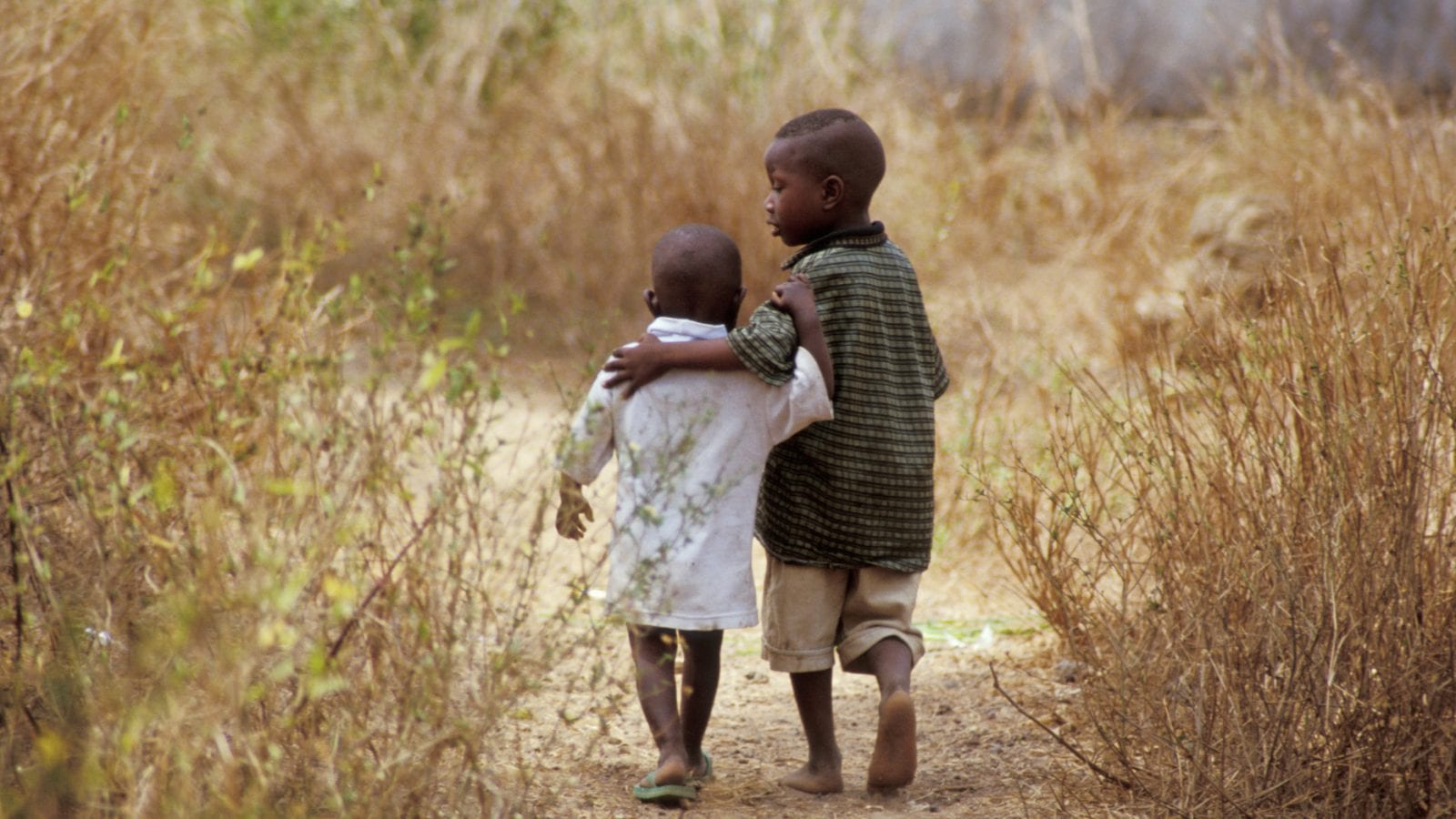
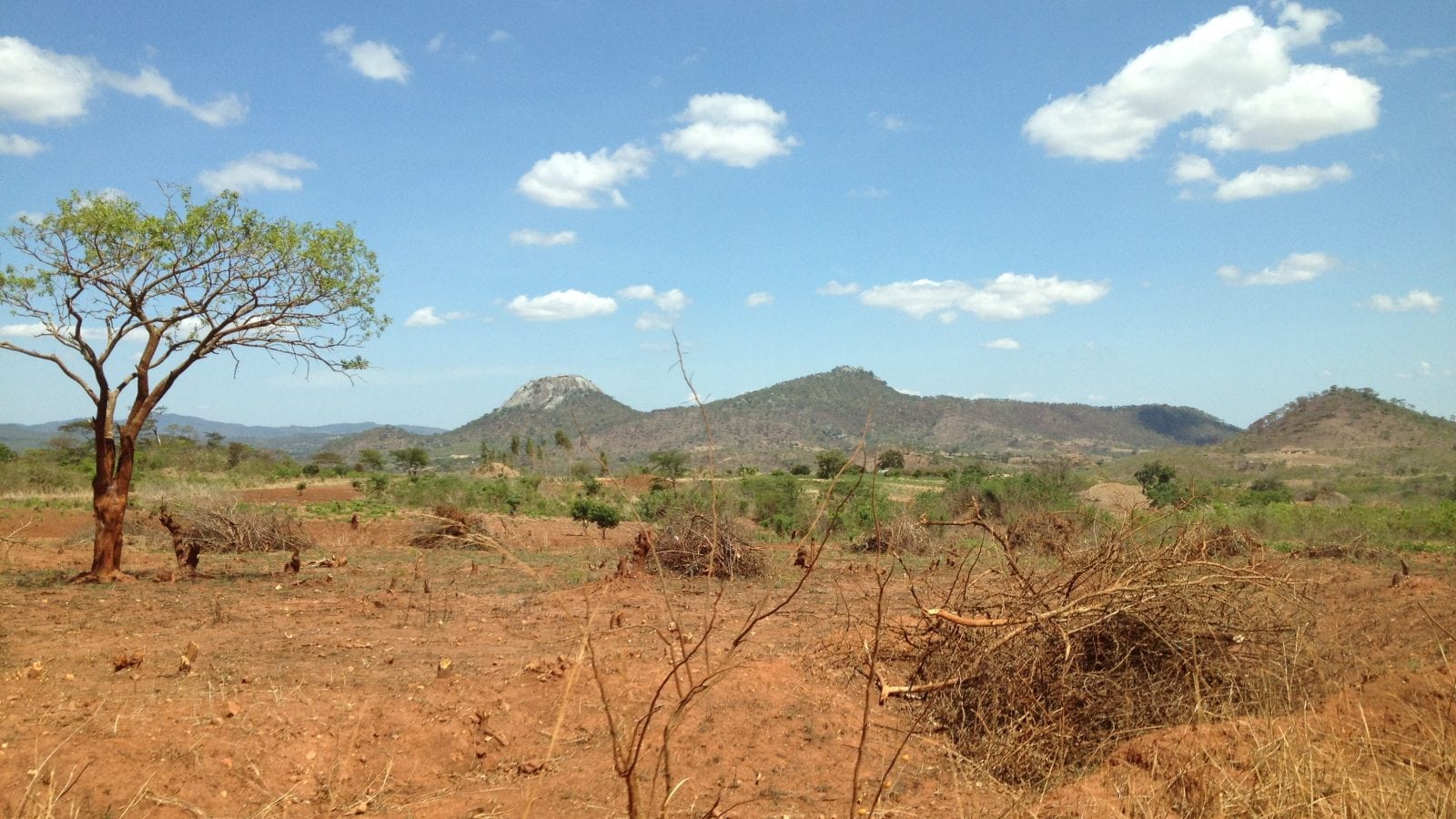
Famine has been officially declared in two parts of Somalia, and many more parts of northern Kenya and Ethiopia are expected to be declared as famine areas, as the worst drought in 60 years devastates the region.

Famine is defined as a crude mortality rate of more than two people per 10,000 per day and wasting rates of above 30 per cent in children under five years old across an entire region, according to the UN Children’s Fund (Unicef).

image

Donate today

Our partners in Ethiopia, Sudan and Kenya are responding. Tearfund’s appeal will fund urgently needed life-saving measures, such as:

  • extra nutrition for malnourished children and pregnant women
  • animal feed to protect livestock that are so crucial to survival
  • construction of additional water points
  • emergency tanks and distribution of water for villages experiencing the worst of the drought conditions
  • food for families who currently are not reached by the World Food Programme response
  • helping communities become more resilient to future crises.

Staff from Tearfund’s local partner, World Concern are seeing malnourished children and mothers on a daily basis as they deal with the reality of the crisis that is gripping the region, which is also being fuelled by high staple food prices. In a recent assessment of Garissa County and the Liboi area which borders Somalia, World Concern reported visible signs that lack of water and food are taking a serious toll on people’s health.

Elias Kamau, Deputy Africa Director of World Concern, said, ‘Some Kenyan government programmes are providing people with food but the shortage of water is a real challenge and there is evidence of malnutrition among children was clearly visible.’

Littered with carcasses

‘The road sides are littered with carcasses of dead and dying livestock as herdsmen drive their weakened herds towards livestock markets where they are fetching next to nothing,’ said Elias.

He added that refugee camps for Somalis fleeing desperate drought conditions were ‘bursting at the seams’, with hundreds of new arrivals pouring in each day. There are three camps in the area, built to house 90,000 people, but are actually holding around 400,000.

Aid agencies recognise the need to help Somalis in their own country but insecurity has severely curtailed their ability to work there. Expected rains from March to May failed in Somalia, with the Juba region in the south being particularly badly affected by drought as a result.

image

Water trucks

Most of the communities in Juba are pastoralists who rely on livestock for their livelihoods and the failure of the rains has resulted in a mass movement of people seeking help.

World Concern is looking to scale-up its operations in areas where access and security can be guaranteed.

This will take the form of improved access to clean water, food for the most vulnerable including children, mothers and the elderly, sanitation facilities and supplies of basic household items. As well as supporting World Concern, Tearfund is funding the transportation of water supplies by lorry into northern Kenya by our partner CCSMKE.

Over many years of work across Kenya and Ethiopia, Tearfund has been building the resilience of drought-prone communities to climatic shocks, for example, by supplying drought-resistant seeds to crop-growing areas and constructing covered dams to store water.

Donate today to help save lives

Millions go hungry in East Africa - Crisis Appeal

Millions go hungry in East Africa - Crisis Appeal – 6 Jul 2011

Tearfund is asking people to pray for the situation in East Africa, where more than 10 million people are facing severe hunger as some areas experience the worst drought in 60 years, destroying crops and livestock.

Richard Lister, Tearfund’s Head of Region for East Africa, said, “There has been widespread loss of crops and livestock and the impact of the drought has been worsened by high food prices and, in some areas, conflict. There is a high risk of this crisis becoming critical if rains remain erratic.”

More than 10 million people across the region are facing extreme hunger: 4.9 million in Ethiopia, 3.5 million in Kenya, 2.5 million in Somalia, 600,000 in Uganda and 163,000 in Djibouti.

Give to our East Africa Crisis Appeal today

Work by Tearfund partners to prepare communities to better withstand drought has been going on for many years, which has helped lessen the impact for many. However, deteriorating climatic conditions this year are taking their toll.

Robert Schofield, Tearfund’s Disaster Management Director, said: “We musn’t forget this is sub-Saharan Africa, which is a challenging environment and this is going to keep happening for some people.

“Climate change means this is going to occur more frequently and will be worse each time, which is why two things are crucial: urgent international action much be taken to address climate change; and investment in long-term disaster risk reduction initiatives, so poor communities are prepared when they are faced with adverse weather conditions.”

To add to the pressure on struggling families, staple food prices have rocketed. Tearfund has been lobbying the G20 leaders recently to tackle high global food prices by protecting the most vulnerable people and building long-term resilience to disasters.

Refugees continue to flee Ivory Coast

Refugees continue to flee Ivory Coast – 22 Apr 2011

An ongoing ‘precarious’ security and political situation in Ivory Coast is expected to swell the number of refugees seeking safety in Liberia to at least 250,000 by the end of June. Unicef predicts the figure could even be as high as 500,000, as the crisis shows no sign of easing despite the arrest of former president Laurent Gbagbo.

image

Tearfund partners are helping thousands of Ivorians who have fled to Liberia, the vast majority of whom are women and children. Latest UN estimates say more than 140,000 refugees are now in Liberia, with 45,000 arriving in one county in just over a month.

Tearfund partners are providing healthcare to the displaced in Nimba County and clean water and sanitation and to distribute food in the adjacent Grand Geddeh County. The World Food Programme has begun airlifting food into Liberia from Niger and Mali but Unicef says the lack of supplies is a ‘major concern’.

Rainy season approaches

Another concern is that April marks the start of the rainy season and this could make getting relief aid to people harder as poor quality roads become impassable.

In Ivory Coast itself, although Alassane Ouattara is now in control, there are still pockets of resistance to his forces and outbreaks of lawlessness. Tearfund partners in Ivory Coast are to join a multi-agency assessment on returning to the western town of Duekoue, where fighting forced them to stop working three weeks ago.

Donate today

  • €31 can pay for school fees for a vulnerable child
  • €55 can provide a family of with essential household items,water containers and blankets

You can help the refugees by giving to our Emergency Fund today

Ethnic tribes in Myanmar receive aid

Ethnic tribes in Myanmar receive aid – 13 Apr 2011

Tearfund partners are successfully managing to bring vital aid to thousands of isolated villagers hit by a powerful earthquake in eastern Myanmar (Burma) nearly three weeks ago.

About 100 people died and another 150 were injured after a 6.8 magnitude tremor struck Eastern Shan State at the end of last month. Assessments put the number of people affected at 18,000 across 90 villages, with widespread damage to roads, bridges, schools, churches and monasteries. In the 50 most severely affected villages, more than half of all buildings have either been damaged or destroyed.

One church building in the Lahu ethnic community of Kya Kuni collapsed while a large gathering of women were inside, with 25 people reported to have been killed and many more badly injured.

Three Tearfund partners have been working in the affected areas since the immediate aftermath of the quake. Isolated ethnic Akha and Lahu communities, which have received no other outside help, are being assisted by two partners.

image

Leprosy

Food, water, medical kits, temporary shelter and non-food items, such as cooking utensils, have been supplied and work is progressing to set up a trauma care and support service for those affected. From an initial response in five villages, relief work has spread to 22 villages.

Another partner is offering help to five villages where leprosy is heavily prevalent, once again offering food aid, water and sanitation.

Partner staff also plan to set up Village Relief Committees which will help implement recovery activities, with special attention towards people with disabilities, the elderly, women and children. Using partner expertise on reducing the impact of disasters, homes will be rebuilt so they are better able to withstand future earthquakes and villagers will receive disaster response training.

Land restoration and repairs to water supplies will also be carried out.

Give today to support our Emergency Work

Ivory Coast Crisis – 8 Apr 2011

Well over 130,000 Ivorians have fled their country into neighbouring Liberia amid fighting caused by a disputed presidential election last November. One million people have been displaced, creating massive humanitarian need and placing an increased strain on border communities that are ill-equipped to deal with such an influx.

‘The situation in Ivory Coast is extremely worrying as it has potential to destablise the entire region’ says Tearfund Ireland Chief Executive Reuben Coulter, who worked in Liberia for two years ‘We have excellent local partners who have been able to provide vital assistance to the refugees.’

image

Agencies involved in medical work are reporting an alarming caseload of people needing treatment for gunshot and machete wounds. Of the refugees registered, 60 per cent are under the age of 18 and 54 per cent are female. Most are living with host communities in overcrowded conditions without adequate access to food, water and sanitation.

Tearfund partner Equip is supporting 40,000 refugees in Liberia’s Nimba County by offering healthcare, which includes screening children for signs of malnutrition and treating diseases such as malaria.

Please help them to respond to this immense human need. Give what you can today.

Only €31 can provide a tarpaulin for shelter for a family and €55 can provide a family of with emergency household items,water containers and blankets.

Myanmar earthquake - church responds – 1 Apr 2011

Tearfund partner’s are helping people hit by strong earthquakes on March 24th in north east Myanmar (Burma). Tearfund Ireland Chief Executive Reuben Coulter visited these partners in January of this year and met with Burmese church leaders.

Three powerful tremors struck close to northern Thailand and the border with Laos, and more than 100 people died. One of the biggest losses of life was at a church in north east Myanmar where the whole building collapsed killing 25 members and injuring 50 others.

Tearfund partner agencies – Myanmar Baptist Convention (MBC) and Mekong Minority Foundation (MMF) – have jointly initiated an emergency response. They have assessed the imediate needs and are now working in five badly affected communities – providing temporary shelter, food and medical help to affected people. Initial assessments show that the greatest damage and loss of life is in and around the Shan town of Ta Lar, where several dozen structures collapsed.

image

Tearfund is making emergency funds available to support MBC, MMF and other partners. They are planning immediate relief such as temporary shelter, food rations and meeting basic medical needs – as well as continuing longer-term support for the region. This will include working with communities to reduce the risks when facing further earthquakes and other disasters.

Page 2 of 6 pages  <  1 2 3 4 >  Last »