News : Emergencies
Haiti 2 years on – 9 Jan 2012
Catherine Carey, a nurse in Dublin, went to Haiti for 12 days with Tearfund’s first-ever medical team in Port-au-Prince, the capital of Haiti. Here, she writes of the steps being taken by Tearfund to help people recover from the devastation of the 2010 earthquake.
In the hustle and bustle of morning rush hour in Port-au-Prince, children stream out of slums – immaculate in their school uniforms. Women in smart skirts and blouses walk by, carrying baskets of produce on their heads. Surfaceless roads, still featuring piles of earthquake-damage rubble at the side of them, are jammed with four-wheel drives, cars and motorbikes.
Amid the chaos, it’s difficult to get to our destination – a church building where we’ll hold our baby clinic. Tomorrow, we’ll take to the roads again, and by the end of the week, we’ll have completed an exhausting circuit of open spaces, church buildings and temporary camps, where people still live in tents, almost two years since the 7.0-magnitude earthquake hit the Caribbean country.
At each temporary camp, we’ll begin with the community volunteer making a megaphone announcement to alert people to the fact that the clinic is about to begin. We’ll then offer free antenatal and postnatal advice to mothers, and weigh babies and provide vaccinations to the infants. In the open areas, we’ll hang the weighing scales from the branches of trees!
The daily grind
Life in Haiti is far from easy. It was the poorest country in the western hemisphere, before the earthquake struck. In one of the tented camps, where hundreds of people live under tarpaulin, the Haitians proudly show off their primary school that they’re running in abandoned buses that act as classrooms. There are few books; the teachers are volunteers. But, despite all this, children are learning to read and write.
For those fortunate enough to have a job, work usually starts at 7am and runs to 7pm, six days a week. And the typical wage packet for these long hours is just $5 per day – $30 for the whole week.

Building micro-businesses
As a member of the 11-strong medical team from Tearfund, I spent the time attached to Kings Hospital, supported by Tearfund partner World Relief. World Relief have used post-earthquake funding from Tearfund to support a number of people with start-up business loans. Among those to benefit are community volunteers Kathleen and Antoinette, who I had the privilege of meeting one day. Kathleen has used her $200 grant to produce peanut butter from peanuts and this helps her support her children and younger siblings. Meanwhile, Antoinette sells charcoal for fuel. Kathleen and Antoinette lost so much in the earthquake, yet they getting on with their lives and volunteering to work in their community by helping at the clinics and providing health education classes.
Isolated but not alone
On one of the last days before I came home, I left my usual nursing routine in Port-au-Prince and made the three-hour, 25km journey along a windy highway to the highland village of Leogane, where the epicentre of the earthquake was. From there, I made a 45-minutes journey in a jeep, followed by a hike through a riverbed and up a dirt track, to reach a stream that is being diverted by Tearfund to provide clean water for the village.
I met some local people who were provided with new homes, and I saw a transitional school that has been built by Tearfund. Because of the village’s isolated position, Tearfund has been the only organisation to work there. All the building supplies have been carried by hand, up the mountain, by the local people.
Together
Priscilla is a mother whose home was destroyed in the earthquake. With immense pride, she showed me round the two-room shelter that had been built for her family by Tearfund. One of the most moving moments of my trip was when I held hands with Priscilla and we prayed together – two mothers from different countries sharing in God’s love.
Increasing desperation in East Africa – 6 Oct 2011
‘This is the worst crisis we’ve ever experienced. We’ve gone from a reasonably successful life to utter devastation.’
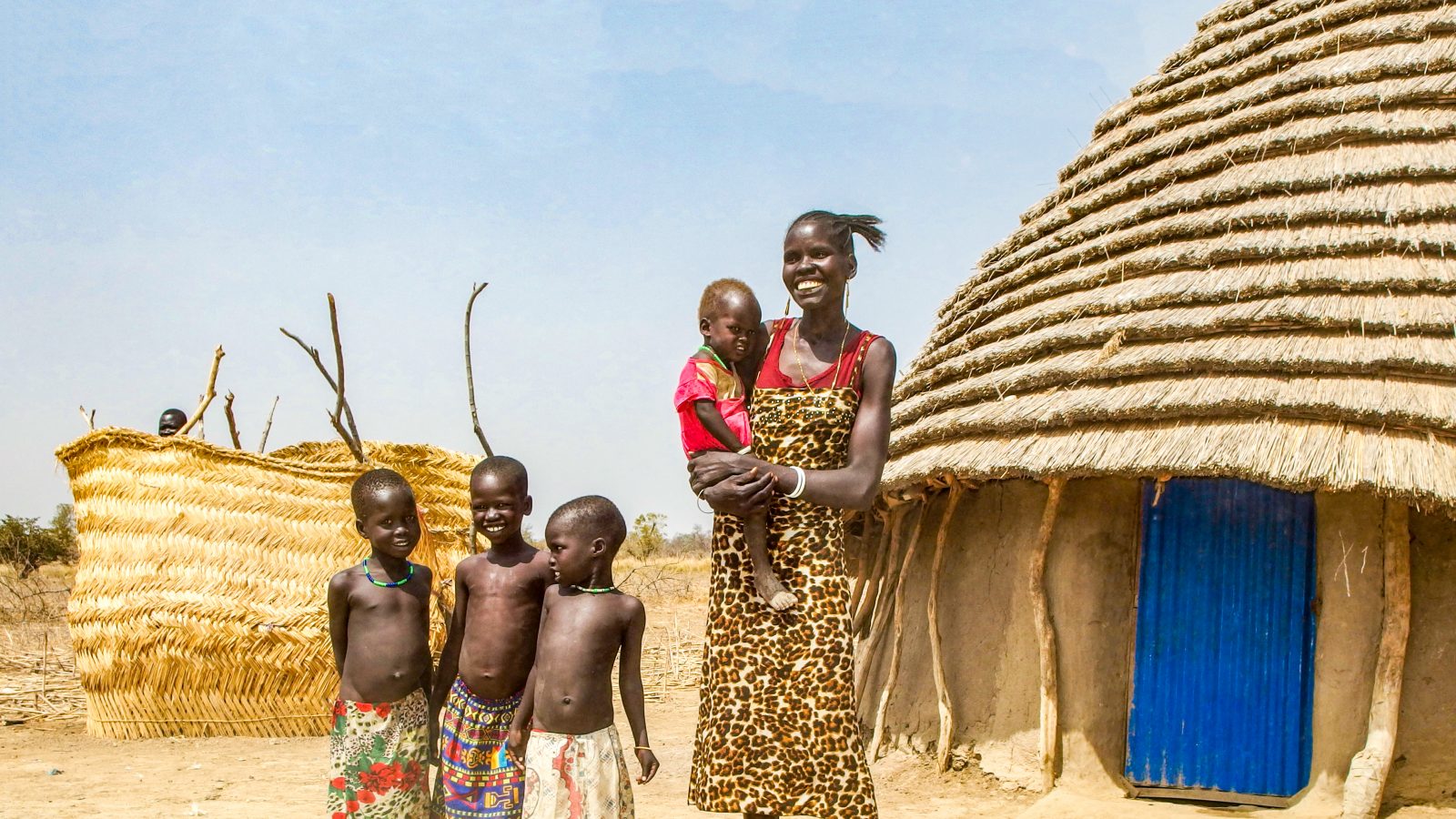
The words of Salina Mamoru convey something of the detrimental impact of the drought affecting more than 13 million people in East Africa but her appearance and living conditions also speak volumes. The 37-year-old is staying in the Katilu displacement camp in Turkana, northern Kenya, a dry, sandy and dusty place that has no home comforts.
Yet people like Salina come here in hope they will find food and water, two things in incredibly short supply in northern Kenya, as well as Somalia and southern Ethiopia after months without rain.
For Salina and her neighbours, accommodation at the camp consists of huts made of mud and sticks, with a few residents having sheets of plastic to bolster their flimsy rooves.
Salina has six children to look after and all her money has gone on buying food and medicines to keep them alive. Her husband can’t find work in this parched landscape and there’s no help forthcoming from the government or anyone else.
Salina, who is thin and tired, prays for three things, that her sick children will get better, her husband will find work and there’ll be rain soon.
28-day walk
It’s a prayer echoed by mother-of-four Maka who walked 28 days through the bush between Somalia and Kenya. It was a sapping and heartbreaking journey, with Maka seeing people die along the way due to lack of food and water.
‘People would say “I can’t walk anymore” then sit down under a tree and die,’ she recalls. ‘We don’t have enough food and water. I don’t know what to do with my sick child.’
Tearfund partner, Christian Reformed World Relief Committee (CRWRC), is responding in northern Kenya, providing water and repairing broken boreholes to get supplies back on line. Fellow partner, Christian Community Services of Mount Kenya East (CCSMKE), is also helping by getting water to needy families through organising a shuttle of tankers to the area.
Across East Africa, seven Tearfund partners are tackling hunger caused mainly by drought and high food prices in the hardest-hit regions of Kenya, Somalia and Ethiopia. Life-saving services are being provided to 100,000 refugees and displaced people through distributing food and water and providing cash-for-work, shelter materials and essential non-food items.
Tearfund is also involved in long term work to increase the resilience of communities by improving farming methods and the way people manage water.
However the forecasts are for the crisis to worsen over the coming months, with humanitarian help being needed well into 2012.
Pumpynut - a miracle food – 7 Sep 2011
Throughout the emergencies of the 1980s and 1990s, Tearfund’s emergency teams would set up therapeutic feeding centres in places like Ethiopia and Sudan – essentially intensive care units – in rural areas and mothers came from far and wide, bringing their children for treatment.
Children were fed with special foods that had to be prepared carefully to ensure that they got the correct benefit from it, and nursed back to health over a number of weeks. It was expensive, difficult and hugely disruptive to poor families who had to walk miles to the feeding centres. Added to that, it became clear that therapeutic feeding centres were only reaching a tiny percentage of people and doing virtually nothing to combat the causes of food shortages and malnutrition.
Pumpynut – a miracle solution
It was felt that there had to be a better and more effective way of tackling emergencies and combating malnutrition. The breakthrough came when a Frenchman called Andre Briend came up with a ready-prepared food called Plumpynut. Essentially, a nutritious high-energy paste made from nuts, Plumpynut requires no preparation and keeps for several months.
Tearfund knew that it was on to something that could revolutionise the approach to malnutrition. “Instead of bringing people in for treatment, we could bring this ready-to-eat food to them,” says Reuben Coulter, Chief Executive of Tearfund Ireland, who witnessed this approach in use in Darfur. With supplies of Plumpynut in local health facilities, more people could be reached and malnutrition could be caught earlier.
Even in emergency situations it was found that most severely malnourished children don’t need major medical attention. With Plumpynut and the minimum medical attention, they get better. If the child doesn’t have any medical complications they can be sent home with their mother and a few weeks supply of this food. The child recovers in front of the community because of the food the mother is feeding it rather than because of some magic cure by some foreign doctor – the empowerment and value to that mother is enormous.
Going global
Realising the potential of this approach, the Irish aid agency Concern teamed up with another organisation called Valid International, and conducted extensive trials and research. Tearfund also became involved and together they compiled whole body of evidence confirming the success of community management of acute malnutrition (CMAM)* as it became known. Today this approach is used in all Tearfund’s nutrition programmes in emergency situations.
The evidence was brought to the World Health Organisation (WHO). CMAM and Plumpynut was able to help 75 percent of malnourished children at lower cost, better survival rates and less disruption to the families. In 2007, the WHO changed its policy to recommend this approach to dealing with malnutrition, and more children’s lives have been saved as a result.
Pakistan floods - one year update – 28 Jul 2011
In August last year, Pakistan was hit by its worst natural disaster in living memory. More than 1,750 people are thought to have died and an estimated 18 million people were affected by the floods. This figure represents more people than those affected by the 2004 Indian Ocean tsunami, the 2010 Haiti earthquake and the 2005 Kamir earthquake combined.
In Ireland, Tearfund raised over €100,000 for its Pakistan appeal. Here is an example of how your unswerving support rescued and restored…
The 19th October 2010 is a date seared into the memory of father-of-ten Rozi Khan from Pakistan.
The worst flooding in the country’s recent history swept into his village of Mangal Khan in Sindh and took away his possessions and livelihood. Within hours of the flooding, 16 hectares of his rice crop were obliterated: ‘When I remember those moments, I still find tears in my eyes,’ says Rozi, 38.
Losing this food was bad enough but its disappearance also left him with a sense of hopelessness. Previous natural disasters had made him impoverished, forcing him to resort to moneylenders to pay for crop seeds.
He confesses to being heartbroken as the flooding wiped out his ability to repay his loans on the back of crop sales. Tearfund was the only organisation to come to Rozi’s village offering help and hope to get out of the black hole of poverty.
Seeing the need to get him growing as soon as the floods subsided, Tearfund organised for a tractor to cultivate part of his land. He was also given high quality sunflower seeds and help via a seed drill to plant them. After a few months, the oil-rich crop was ready for harvesting.
‘I thank God for sending this team to help me,’ says Rozi, who plans to use crop surpluses to pay off his loans over the next three years.
Rozi is one of thousands of Pakistanis helped by Tearfund to restart their livelihoods after the floods. Long-term help continues. We’re now rebuilding homes and providing water and sanitation to the most vulnerable facing material and spiritual poverty.
Famine declared in East Africa – 20 Jul 2011
Famine has been officially declared in two parts of Somalia, and many more parts of northern Kenya and Ethiopia are expected to be declared as famine areas, as the worst drought in 60 years devastates the region.
Famine is defined as a crude mortality rate of more than two people per 10,000 per day and wasting rates of above 30 per cent in children under five years old across an entire region, according to the UN Children’s Fund (Unicef).

Our partners in Ethiopia, Sudan and Kenya are responding. Tearfund’s appeal will fund urgently needed life-saving measures, such as:
- extra nutrition for malnourished children and pregnant women
- animal feed to protect livestock that are so crucial to survival
- construction of additional water points
- emergency tanks and distribution of water for villages experiencing the worst of the drought conditions
- food for families who currently are not reached by the World Food Programme response
- helping communities become more resilient to future crises.
Staff from Tearfund’s local partner, World Concern are seeing malnourished children and mothers on a daily basis as they deal with the reality of the crisis that is gripping the region, which is also being fuelled by high staple food prices. In a recent assessment of Garissa County and the Liboi area which borders Somalia, World Concern reported visible signs that lack of water and food are taking a serious toll on people’s health.
Elias Kamau, Deputy Africa Director of World Concern, said, ‘Some Kenyan government programmes are providing people with food but the shortage of water is a real challenge and there is evidence of malnutrition among children was clearly visible.’
Littered with carcasses
‘The road sides are littered with carcasses of dead and dying livestock as herdsmen drive their weakened herds towards livestock markets where they are fetching next to nothing,’ said Elias.
He added that refugee camps for Somalis fleeing desperate drought conditions were ‘bursting at the seams’, with hundreds of new arrivals pouring in each day. There are three camps in the area, built to house 90,000 people, but are actually holding around 400,000.
Aid agencies recognise the need to help Somalis in their own country but insecurity has severely curtailed their ability to work there. Expected rains from March to May failed in Somalia, with the Juba region in the south being particularly badly affected by drought as a result.

Water trucks
Most of the communities in Juba are pastoralists who rely on livestock for their livelihoods and the failure of the rains has resulted in a mass movement of people seeking help.
World Concern is looking to scale-up its operations in areas where access and security can be guaranteed.
This will take the form of improved access to clean water, food for the most vulnerable including children, mothers and the elderly, sanitation facilities and supplies of basic household items. As well as supporting World Concern, Tearfund is funding the transportation of water supplies by lorry into northern Kenya by our partner CCSMKE.
Over many years of work across Kenya and Ethiopia, Tearfund has been building the resilience of drought-prone communities to climatic shocks, for example, by supplying drought-resistant seeds to crop-growing areas and constructing covered dams to store water.
Donate today to help save lives
Millions go hungry in East Africa - Crisis Appeal – 6 Jul 2011
Tearfund is asking people to pray for the situation in East Africa, where more than 10 million people are facing severe hunger as some areas experience the worst drought in 60 years, destroying crops and livestock.
Richard Lister, Tearfund’s Head of Region for East Africa, said, “There has been widespread loss of crops and livestock and the impact of the drought has been worsened by high food prices and, in some areas, conflict. There is a high risk of this crisis becoming critical if rains remain erratic.”
More than 10 million people across the region are facing extreme hunger: 4.9 million in Ethiopia, 3.5 million in Kenya, 2.5 million in Somalia, 600,000 in Uganda and 163,000 in Djibouti.
Give to our East Africa Crisis Appeal today
Work by Tearfund partners to prepare communities to better withstand drought has been going on for many years, which has helped lessen the impact for many. However, deteriorating climatic conditions this year are taking their toll.
Robert Schofield, Tearfund’s Disaster Management Director, said: “We musn’t forget this is sub-Saharan Africa, which is a challenging environment and this is going to keep happening for some people.
“Climate change means this is going to occur more frequently and will be worse each time, which is why two things are crucial: urgent international action much be taken to address climate change; and investment in long-term disaster risk reduction initiatives, so poor communities are prepared when they are faced with adverse weather conditions.”
To add to the pressure on struggling families, staple food prices have rocketed. Tearfund has been lobbying the G20 leaders recently to tackle high global food prices by protecting the most vulnerable people and building long-term resilience to disasters.