News : News Article
Millions go hungry in East Africa - Crisis Appeal – 6 Jul 2011
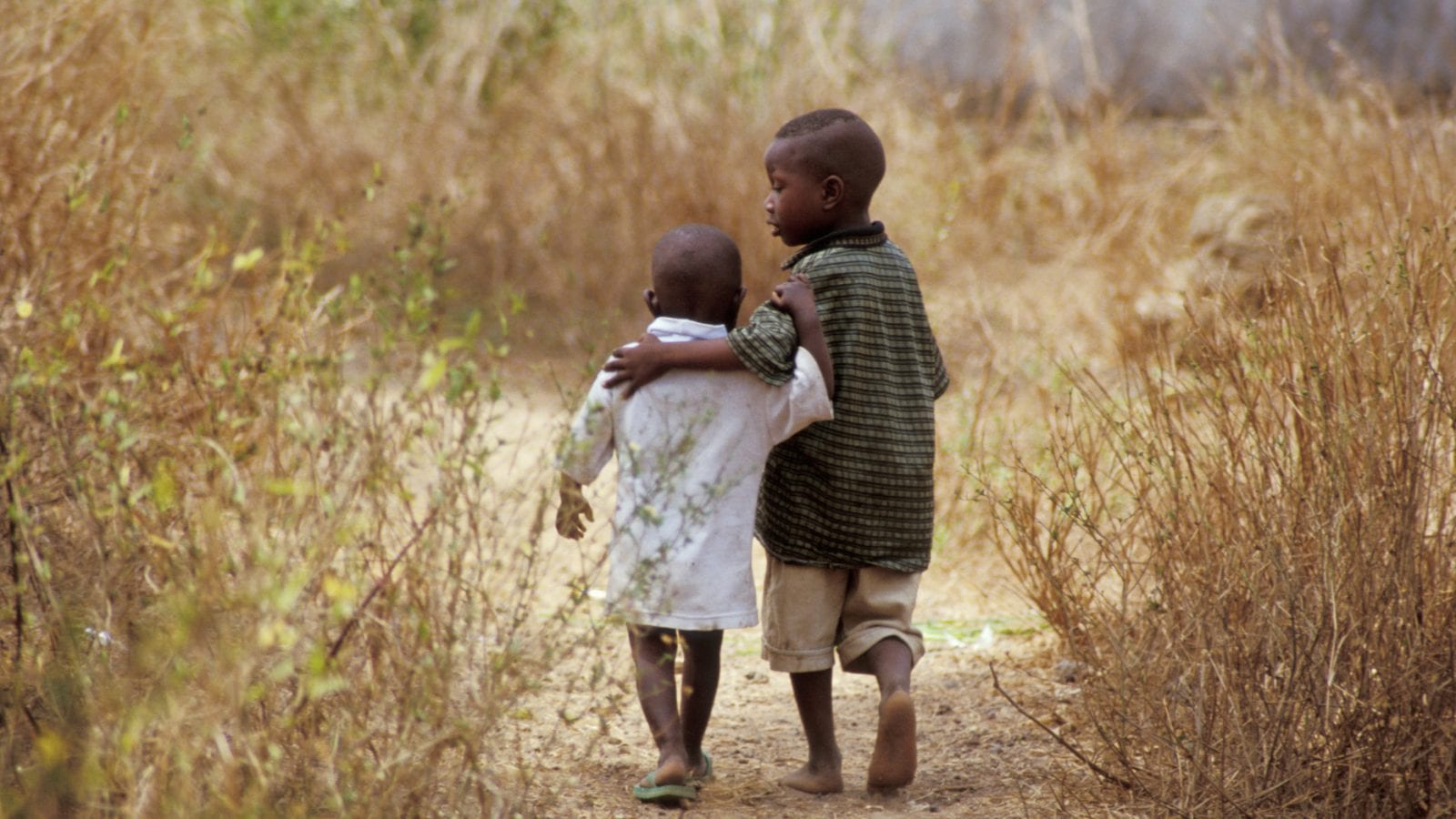
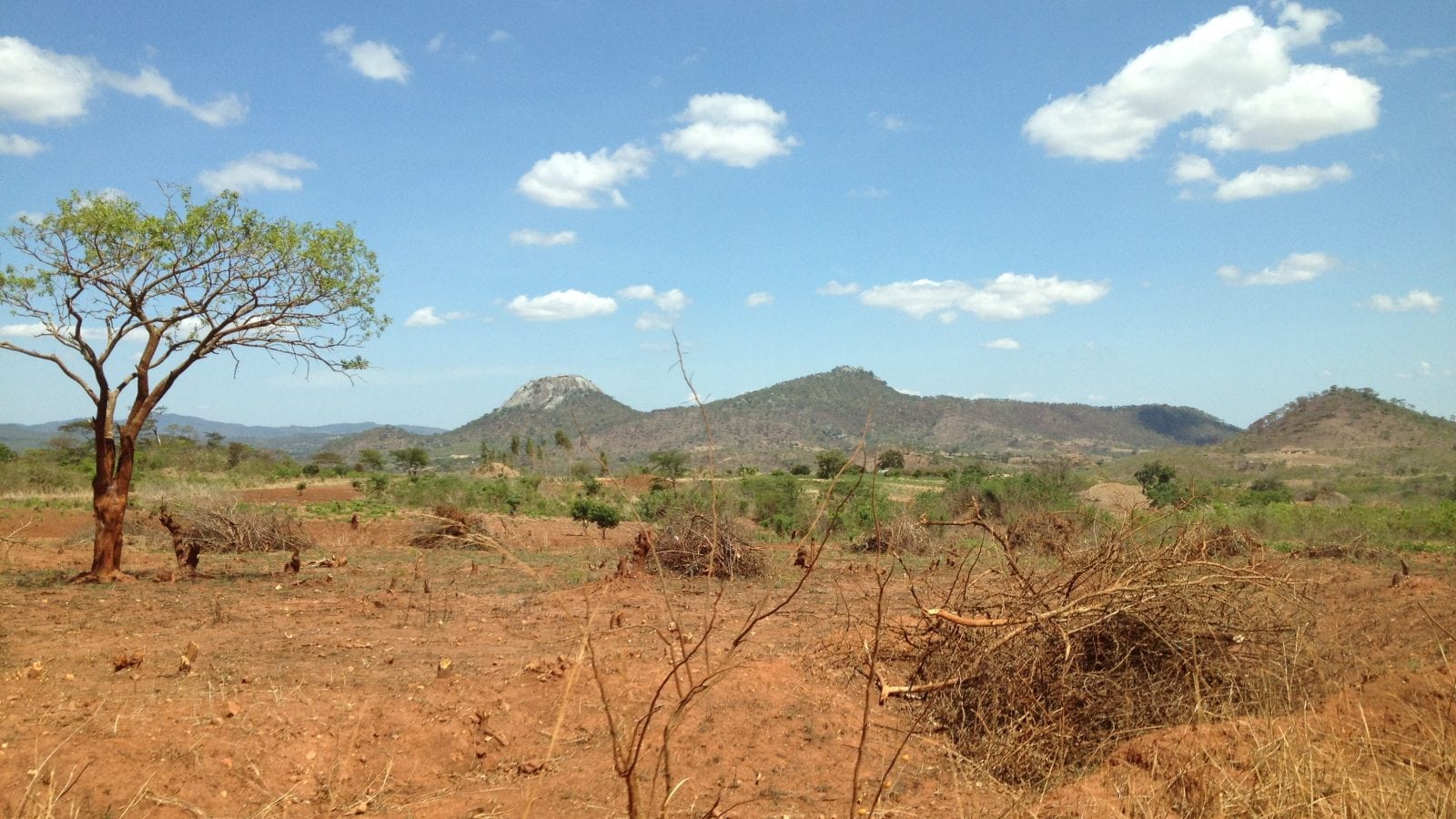
Tearfund is asking people to pray for the situation in East Africa, where more than 10 million people are facing severe hunger as some areas experience the worst drought in 60 years, destroying crops and livestock.
Richard Lister, Tearfund’s Head of Region for East Africa, said, “There has been widespread loss of crops and livestock and the impact of the drought has been worsened by high food prices and, in some areas, conflict. There is a high risk of this crisis becoming critical if rains remain erratic.”
More than 10 million people across the region are facing extreme hunger: 4.9 million in Ethiopia, 3.5 million in Kenya, 2.5 million in Somalia, 600,000 in Uganda and 163,000 in Djibouti.
Give to our East Africa Crisis Appeal today
Work by Tearfund partners to prepare communities to better withstand drought has been going on for many years, which has helped lessen the impact for many. However, deteriorating climatic conditions this year are taking their toll.
Robert Schofield, Tearfund’s Disaster Management Director, said: “We musn’t forget this is sub-Saharan Africa, which is a challenging environment and this is going to keep happening for some people.
“Climate change means this is going to occur more frequently and will be worse each time, which is why two things are crucial: urgent international action much be taken to address climate change; and investment in long-term disaster risk reduction initiatives, so poor communities are prepared when they are faced with adverse weather conditions.”
To add to the pressure on struggling families, staple food prices have rocketed. Tearfund has been lobbying the G20 leaders recently to tackle high global food prices by protecting the most vulnerable people and building long-term resilience to disasters.
Tragedy strikes Peah’s family – 1 Jul 2011
Tragedy has struck the family of Peah, the young boy featured in Tearfund Ireland’s autumn 2008 film (view film here). Over the past few year’s Peah life has been transformed after being fostered into this loving family. Now he has lost his foster father.
In the frantic traffic of Phnom Penh, Cambodia his foster father came off his motorbike on his way to collect Peah from school. He suffered what appeared to be minor injuries and got back on his bike and went home. Later that evening he started vomiting blood. His family rushed him to hospital but tragically he died in the hospital four hours later.
Peah and all his family are in a state of shock and grieving his loss. Tearfund and our local partner Little Conquerors are also sad at the loss of this wonderful man. We will continue to support this family Please pray for the family during this difficult time.
Rescued from the streets
Peah was abandoned on the streets of Phnom Penh, Cambodia when he was only 6 years old. Fortunately Chendai, who works with Tearfund’s partner Little Conquerors found him. We were were able to place him with a loving foster family who raised him as their own son. Little Conqueror’s supports foster families by providing social work assistance, helping to pay school fees and helping the parents establish small business to sustain themselves.
Give to our Forgotten Children Fund today
- €22 per month can support two children in foster families
- €86 can pay for school fees and books for four families for one year
- €125 can pay for a social worker who places children in a foster family
Download a Standing Order Form to give regularly
Give online here
On 9th July 2011 South Sudan will be declaring independence from North Sudan – 23 Jun 2011
In less than a month’s time, on 9 July 2011, South Sudan will be declaring independence from North Sudan, becoming the world’s 195th country.
Tearfund’s Sudan Country Representative Jonas Njelango reflects on the prospects for this new country.
‘We have many hopes for the new Republic of South Sudan but we must be also realistic that there are a lot of challenges. In the South, it is estimated that 90 per cent of people live below the poverty line of less than US$1 a day. Despite this we are positive about what lies ahead.
‘In Goja, for example, the community, led by the local church, has a 20-year plan to address local problems. Six years on they are ahead of their plan, having built a school, a church and most houses now have toilets. Thanks to hygiene education, people are now washing their hands, boiling water and using rubbish pits.
‘Farming cooperatives are cultivating large areas of land and many now own small businesses. Such transformation comes through a process known as ‘Umoja’, which inspires churches and communities through the use of the Bible to consider what resources they have and to work together to undertake their own development.
‘This brings hope for the future of the South and we need to pray to see more of it.’
In the lead-up to 9 July, Tearfund has created a 21-day prayer guide to help you remember the people of Sudan and South Sudan during this key transitional time.
- Please pray for the new Republic of South Sudan as it declares independence on 9 July. Pray for wisdom for its leaders in dealing with the various challenges it will face
- Pray for the transformation taking place across the country, in places like Goja, to bring hope to the Sudanese people. Pray this will continue and be scaled up
- With One Voice, pray that all support given to the new Republic of South Sudan after 9 July will be helpful in building up the country and in line with South Sudanese priorities and aspirations
- Pray for good relations between the Republic of Sudan and the new Republic of South Sudan after 9 July
Sounds fishy? - agricultural innovation improves nutrition – 8 Jun 2011
A Tearfund-supported research project in Israel and Palestine has developed an affordable and sustainable aquaponics system to help poor families in developing countries produce higher fruit and vegetable yields.
Tim Evans, Kyle Petrie and Chris Somerville (pictured) recently trialed their Aquaponics system in Israel to see if it could be used in a refugee camp setting with incredible results. The project was supported by Tearfund, Leprosy Mission and Church of the Nazarene in Jerusalem.

What is Aquaponics?
Take some fish, a few pipes and lots of water and the result is incredible vegetables. Aquaponics is a system where plants are grown in a soil-less environment and they are fertilised as the plants soak up nutrients from water enriched by fish waste. It is a closed system which means it uses very little water which is important in arid climates.
Why is Aquaponics better than traditional methods?
For people living in refugee camps there is little space and even less water. Growing fresh fruit and vegetables can be very difficult and as a result malnutrition rates are high. The research showed that aquaponically grown plants can grow up to five times faster than in local soils and makes planting and harvesting easier. A manual has been developed for local community groups, giving them a step by-step guide on how to build and maintain a household aquaponic system. It is hoped that this simple technology will help poor households in developing countries to improve their nutrition and generate income from selling surplus fruit and vegetables.
What’s next?
There has been enormous interest from the UN, the Irish Ambassador and other organisations in Israel/ Palestine. They want to roll out this new technology in parts of the West Bank and get more poor families using it. Tim Evans will stay in Jerusalem as pastor of a local church and continue to run this project also. Meanwhile Chris Somerville has also been asked to train farmers in Jordan on how to set it up for themselves. It’s a really simple idea which is having enormous impact.
“It has been an interesting process to take a project like this from a garden in south Dublin all the way to the rooftop of a church in the heart of Jerusalem,” said Kyle. “It has come with its challenges and also its rewards. It’s been encouraging to meet local people here who are so enthusiastic about what we’re doing.”
Visit their Facebook page for more details
Great goat giveaway tackles Afghan poverty – 8 Jun 2011
A pioneering animal husbandry scheme run by Tearfund is transforming lives among poor communities in Afghanistan.
Improved diets and better standards of living are resulting from the project which is targeting the poorest families in Kandahar province.
Each family that signs up to the scheme receives one goat and two chickens. They agree to give the second kid produced by the female goat to another vulnerable family in their community.
Khatool, who lives in a village a few miles from Kandahar city, is among those to benefit from the goat giveaway: ‘When I received the goat from Tearfund it was pregnant and it was my hope that it would bear a female kid, so that I could help another family.
Surprise
‘After some time passed, I went to my backyard and I saw the goat with two female kids. It was a real surprise for me to see that and now I can help my neighbour, but I also have one to keep myself which makes me very happy.
‘I am grateful to Tearfund for this and for their help towards others, paving the way for us to remove poverty from our country.’
In another nearby village, elderly widow Zalaikha appreciates how the provision of chickens has given her family new income opportunities.
‘My family was one of the poorest families in our village,’ says Zalaikha. ‘I was growing older and disabled and, day by day, I was facing different problems. My family life was hard.
‘The Tearfund people who came here were such helpful people. They asked us to take part in a workshop, explaining that it was to support vulnerable and widowed people, helping them to be healthy.
‘I joined and learned lots of things. During the project, Tearfund helped us by providing different things, like seeds, shovels, goats and buckets, which were incredibly useful.
Incredibly useful
‘Besides these vital things, Tearfund also gave us two chickens which produced many eggs. In the first two months of having these chickens, I collected 35 eggs and put them under my chickens to hatch.
‘These produced 26 new chicks of which 19 were female. After a few months they were able to produce more eggs for my family to use to trade.
‘Now we can buy our necessities from the bazaar using the money from the eggs that we trade and for this we’re very grateful to Tearfund.’
The animal husbandry project is set to boost livelihoods for others as it is being rolled out in more villages. As well as this initiative, Tearfund is working in Afghan communities to improve water, sanitation and hygiene.
Are orphanages the answer? – 25 May 2011
Jessica was abandoned by her parents when she was a few weeks old. She was left to die on a rubbish dump. But, thankfully, her story didn’t end there. Chief Executive Reuben Coulter considers how the church can provide children with a hope and a future.
The challenge of orphanages
- For every three months that a young child resides in an orphanage, they lose one month of development
- In Zimbabwe, nearly 40 per cent of children in orphanages have a surviving parent and 60 per cent have a contactable relative. Poverty was cited as the driving reason for abandonment
- Orphanage care is 10 times more expensive than family-based forms of care
- In Eastern Europe it was shown that more than 60% of children who graduated from orphanages ended up living on the streets or involved in crime because there was no programme to help them transition to the real world.
Read the Families_Not_Orphanages Report for a detailed analysis.
Note: There are many good orphanages with dedicated staff who are doing their best to provide a safe environment for children who have been orphaned or abandoned. Tearfund does not mean to belittle or diminish their work in any way. However it is a short-term solution to immediate needs and longer-term solutions which are in the child’s best interests are desperately needed. If you are supporting an orphanage then ensure that they are following best practice and that children are not being put at risk.
- Does the orphanage screen children to ensure that there are not other alternatives for the child? (ie there may be relatives who could raise the child if supported)
- Does the orphanage endeavor, where possible, to identify foster parents where a child could be placed?
- Does the orphanage have a ‘leaving plan’ for children who reach adulthood to help them enter the real world?
- Does an orphanage have good child protection policies in place?
- Are staff employed by the orphanage vetted?
‘I met Jessica in an orphanage in China when she was four years old. Jessica didn’t smile at me or grab my arm like the other children. She sat silent and alone, avoiding any contact. The staff didn’t know how to help her.
A few months later Jessica was fostered by a young Christian couple who were friends of mine. I wondered how the couple would cope with looking after a child who seemed so emotionally disturbed and withdrawn. That Christmas, I went to visit Jessica and her foster parents. As they welcomed me, a smiling girl rushed up the hallway and hugged my legs. It was Jessica. I couldn’t believe it. In the space of three months she had completely transformed into a vibrant young girl.’
Unsustainable & unsuitable
There are more than 100 million orphans worldwide. The number is growing rapidly, mainly because of AIDS, and there has been a massive rise in the number of orphanages as many organisations, including Christian groups, try to help these children. But are orphanages the answer?
In Ireland, the residential home model has had disastrous consequences for children, despite the fact that we’re a developed country with a social protection system in place and child protection laws.
In developing countries, orphans are potentially much more vulnerable. Many studies have also shown that children can develop physical and psychological abnormalities arising from institutionalism. Children are often abandoned by poor families who feel that they are unable to look after their own child.
In addition the cost of supporting a child in residential care is very expensive. Since orphan numbers continue to grow rapidly and outstrip available resources, residential care is not a viable option for caring for the majority of orphans in the developing world.
Many orphanages, like the one Jessica was in, are extremely well run and have a team of loving staff. However, even the best orphanage cannot replace the loving environment of a family.
So is there a better alternative?
I believe there is. Tearfund works with church partners worldwide to place children in local foster families where they receive the individual love and care that they need.
In Cambodia, our partner Little Conquerors has been able to rescue hundreds of children from the streets of Phnom Penh. Many of the local foster families are extremely poor themselves but, by receiving a low level of support such as help with school fees, they are able to take on an additional child. Little Conquerors’ care workers conduct regular family visits to ensure the child is properly cared for.
Jessica is now 11 years old. Her memories of life in the orphanage are distant. She smiles with joy as she walks hand in hand with her parents .
It’s an incredible example of the local church in action – of Christians welcoming vulnerable children into their home. With 100 million children worldwide in need of a family, it is going to take a determined effort – with all of us working together – to bring lasting transformation.
Please give today.
- €22 per month can support two children in foster families
- €86 can pay for school fees and books for four families for one year
- €125 can pay for a social worker who places children in a foster family
Download a Standing Order Form to give regularly
Give online here